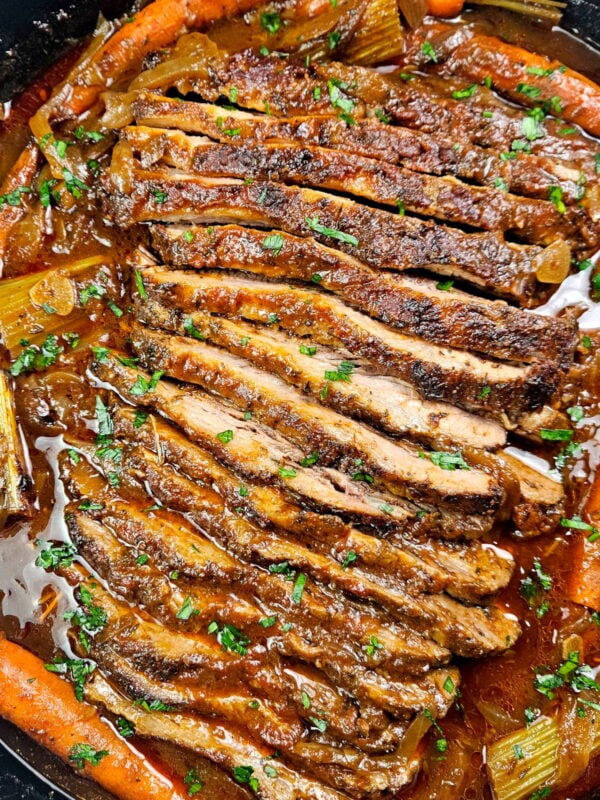
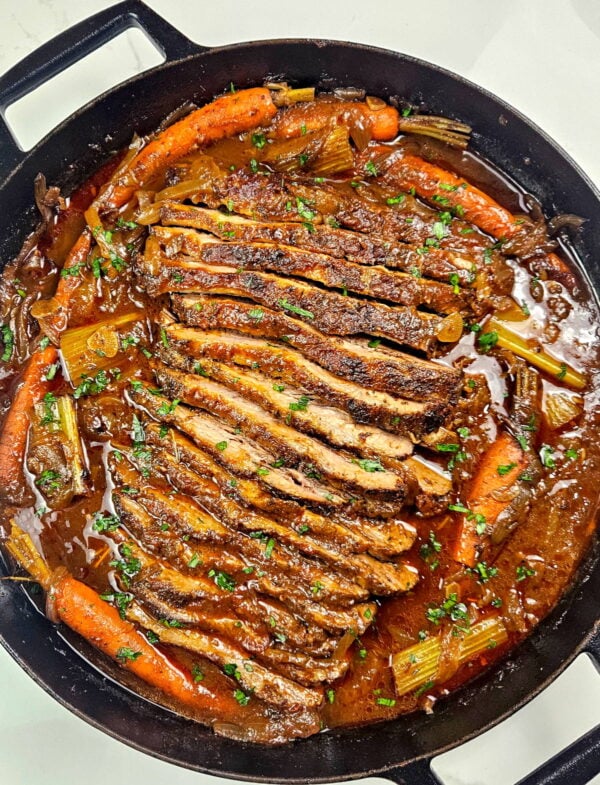
Jewish-Style Braised Brisket is closely tied to Passover, and is known for its slow cooking and the way it turns into something rich, tender, and deeply flavorful over time. It’s the centerpiece people gather around, the one that fills the house with that deep, savory aroma long before anyone sits down to eat.
Funny enough, the first time brisket really caught my attention wasn’t even in a kitchen. It was while watching The Big Bang Theory, where Howard Wolowitz casually talks about his beloved brisket like it’s just part of everyday life. “I’m going for my brisket… my mom made her brisket!” No explanation, no buildup… just brisket, like everyone is already in on it. And I remember sitting there thinking, hmm… boy that brisket must be good.
So when I eventually had it at a friend’s Passover dinner, I was already paying attention. And sure enough, it lived up to everything I had imagined. Naturally, I asked for the recipe, and just like you’d expect, it didn’t come from a cookbook. It came from his grandma… a Jewish grandma who had been making brisket for years. Back home, I worked on my own version, keeping the same approach in mind.
This year, I’m bringing new tradition to my own table for Passover. After all, the table only gets better when you make room for more flavors, more stories, and a few new traditions along the way.
What is Jewish Style Brisket?
Jewish-style brisket is a classic slow-braised beef preparation that has become deeply rooted in holiday traditions, especially during Passover. It starts with brisket, a tougher cut from the chest of the cow that was historically more affordable, and conforms to Jewish dietary laws.
Because this cut isn’t naturally tender, it was traditionally cooked low and slow. Over time, that necessity turned into a defining cooking style. Jewish cooks learned how to transform brisket by braising it for hours with liquid, allowing it to slowly soften while building deep, rich flavor.
What really sets Jewish-style brisket apart is that it isn’t just one fixed recipe, but comes with many versions. The brisket is typically seared first, then cooked with lots of onions and a flavorful liquid base, often including broth, tomato and wine. Some versions use a bit of ketchup for a balance of sweetness, and I like to add it to mine.
Jewish-style brisket is closely tied to Passover for both practical and traditional reasons. It fits within Passover dietary guidelines, but more importantly, it was historically an affordable cut that could feed a large family.
Ingredients Needed
I have included exact ingredient amounts in the recipe card at the end of this post. Here are the things you will need:
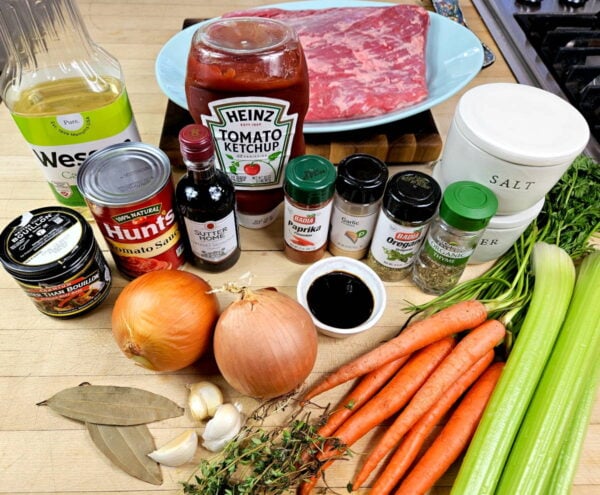
- Brisket – I am using a 4 pound beef brisket here, specifically flat cut (also known as 1st cut). You can use this recipe for even up to 5-6 pounds as I am using plenty of seasonings.
- Salt, pepper, garlic powder, oregano and thyme – This is my simple rub. I rub it all over the brisket before searing.
- Oil – I use this for searing the brisket. Any neutral oil will do.
- Onions – I use plenty of sliced onions here. When caramelized onions cook down, they melt into the sauce and become the base of that rich gravy.
- Garlic – Plenty, sliced.
- Celery – Cut into big chunks.
- Carrots – I like using small heirloom baby carrots here and keeping them whole. If you’re using larger carrots, you can cut them into chunks.
- Red wine – This adds depth and richness. Don’t worry about anything fancy, just use something you’d drink. You can skip it and use extra broth if needed.
- Tomato sauce – Alternately you can use diced or crushed tomatoes.
- Ketchup – This might sound unusual, but it adds a little sweetness that really balances the sauce.
- Beef Broth – This gives the braise body and enhances that deep beefy flavor.
- Worcestershire Sauce – While many brands of Worcestershire sauce are labeled “kosher,” they may contain anchovies. If you follow strict Jewish dietary laws, which forbid mixing meat and fish, you can use a vegetarian variety of Worcestershire sauce.
- Paprika – Just a teaspoon to give the sauce a little boost.
- Bay leaves – I always remove them before serving.
- Fresh Thyme – I finish the braise with sprigs of fresh thyme. If you don’t have fresh, you can add an extra half teaspoon of dried to the braising liquid.

How to Make Jewish Style Braised Brisket
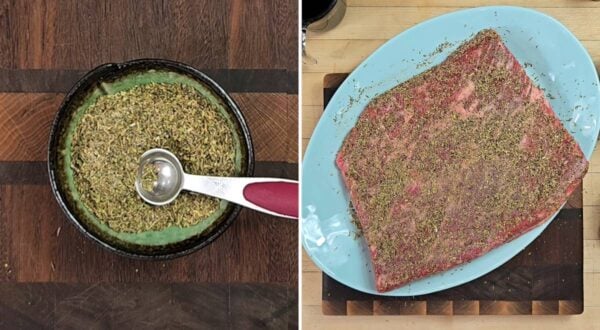
1. Season brisket: In a small bowl, mix salt, pepper, garlic powder, oregano and thyme. Pat the brisket dry with paper towels, then sprinkle the spice mix all over the brisket and press it in well so it sticks to every side.
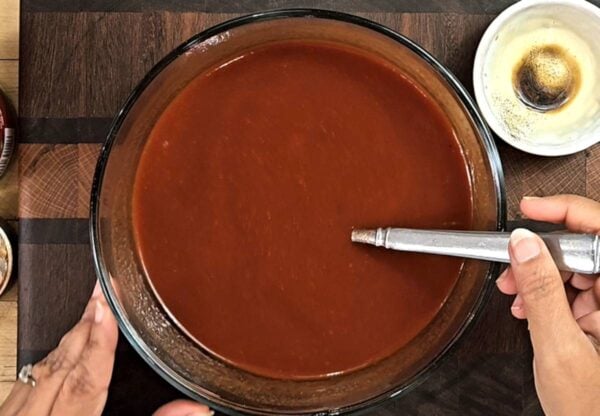
2. Prep the braising liquid: In another bowl, whisk together tomato sauce, ketchup, beef broth, Worcestershire sauce and paprika until smooth. Set aside.
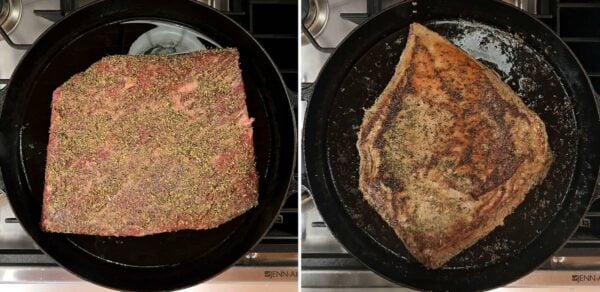
3. Sear brisket: A little oil goes into my largest cast iron skillet, and the brisket hits the skillet once it’s nice and hot. Let it sit undisturbed so it develops that deep brown crust on both sides. Once it’s nicely seared, remove it to a plate.
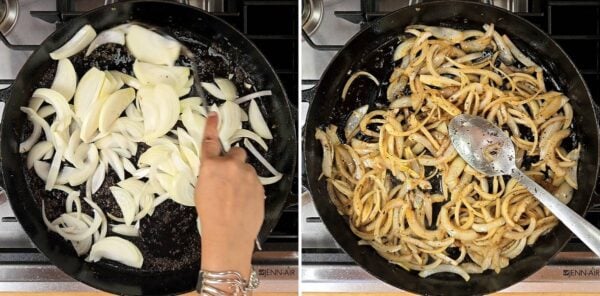
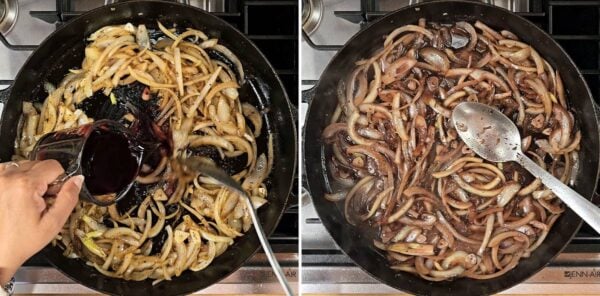
4. Sauté the onions: In that same pot, the onions go in and start cooking down slowly. They soften, pick up all those browned bits, and begin turning into the base of the sauce. Garlic follows for just a minute, just enough to bring out its aroma without letting it burn.
5. Reduce red wine: Then comes the red wine, which loosens up everything stuck to the bottom of the pot. Let it simmer for a couple of minutes so it reduces slightly and concentrates.
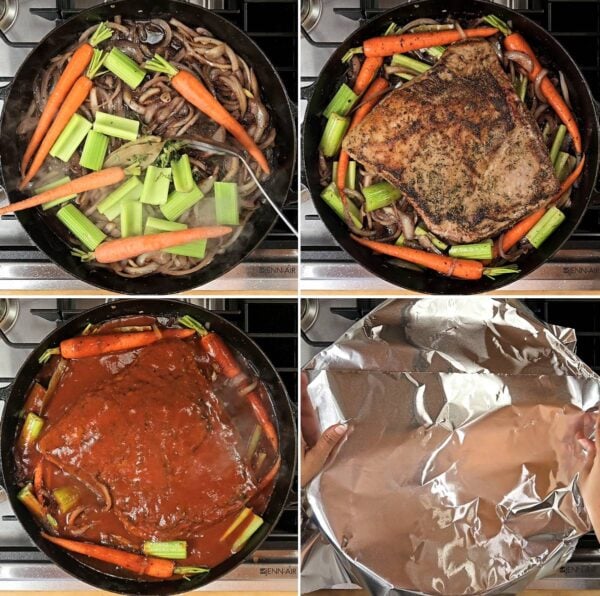
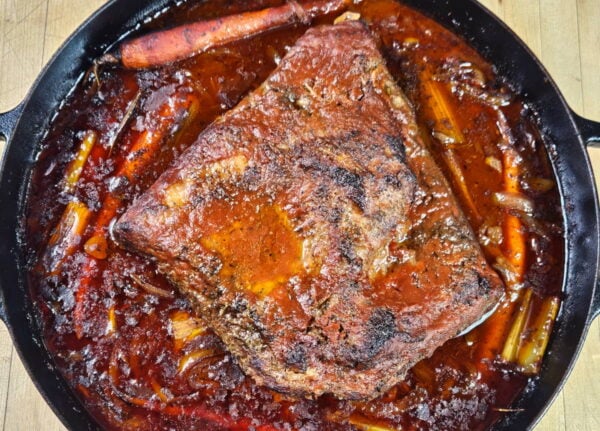
6. Add veggies, brisket and sauce: The celery and carrots go in next. They get a light seasoning of salt and pepper and a few minutes in the pot to start softening. Once that base is ready, the brisket goes back in, and the prepared sauce gets poured over the top, along with bay leaves and fresh thyme. I spoon the sauce over everything, then cover the skillet with foil. (You can use a lid, but I don’t have one big enough for my giant skillet.)
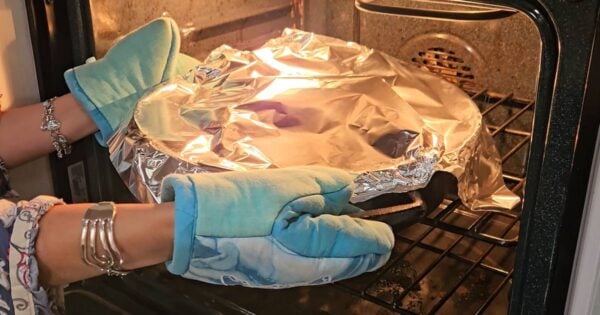
7. Bake: From there, it’s all about time. The pot goes into the oven and slowly braises for 3.5-4 hours.
8. Skim the grease: After the brisket braises, you will find a lot of grease has seeped out and risen to the top of the sauce. I skim that off and discard. (Note: if you cook the brisket a day in advance, you can refrigerate it without removing the grease. It will harden up on top of the sauce, and you can easily peel it off.)
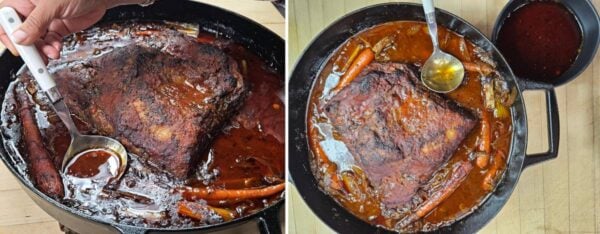
9. Rest: When it’s done, let the brisket rest for at least 20 minutes before slicing.
Alpana’s Tips
- Get that good sear: Take your time with the sear and don’t move the brisket around too much once it hits the pot. Let it sit and develop that deep brown crust on each side.
- Let the onions caramelize properly: This is a big one. Don’t just soften the onions, let them cook long enough to become lightly caramelized. As they break down, they turn sweet, rich, and almost jammy, and that’s what gives the sauce its body and depth.
- Low and slow always wins: Brisket needs gentle heat and time to become tender. If it feels tough at the end, it’s not done yet. Let it keep cooking until it relaxes and becomes easy to slice.
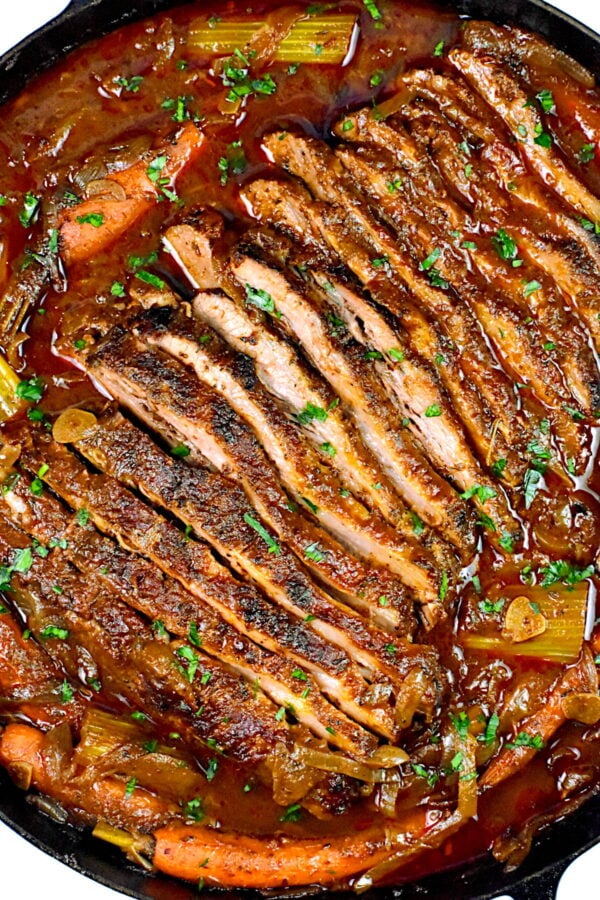
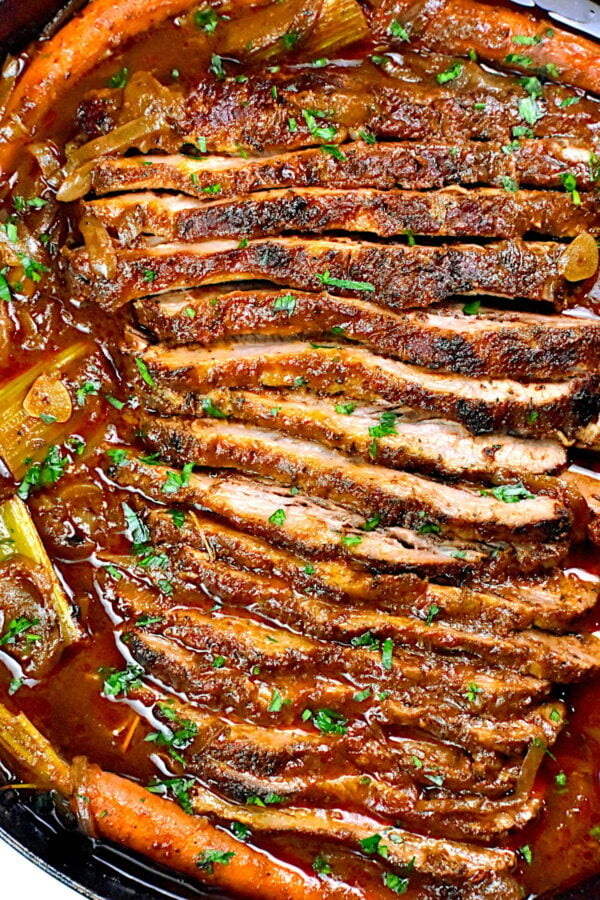
- Slice against the grain: This makes a huge difference. Look at the direction of the fibers in the meat and slice across them, not along them. That’s what gives you tender slices instead of chewy ones.
- Let it rest before slicing: Once it comes out of the oven, give it a little time to rest. This helps the juices settle back into the meat and keeps everything moist when you slice it.
- Finish it in the sauce: After slicing, return the brisket to the pot and spoon that sauce all over. Let it sit in there for a bit so every slice soaks up all that rich, slow-cooked flavor.
- It’s even better the next day: This is one of those recipes that really benefits from sitting overnight. The flavors deepen, the sauce thickens slightly, and everything just tastes more developed the next day.
Serving Suggestions
This brisket is rich and saucy, so I like to start with mashed potatoes. That creamy base with the brisket and all that gravy spooned over the top just works.
Traditionally, Jewish-style brisket is served with simple sides that let the meat shine. Potato dishes are very common, whether it’s mashed potatoes or crispy latkes. You’ll also often see it served with egg noodles or sometimes rice, both great for catching all that sauce.
Bread isn’t typically served during Passover because of dietary restrictions, but outside of the holiday, a slice of challah or any good crusty no-knead bread makes a great addition for soaking up the sauce.
A bowl of matzo ball soup is a great starter for the meal.
Leftovers and Storing
Leftover brisket is honestly something to look forward to. It tastes even better the next day as the flavors deepen and the sauce settles into the meat.
Store it in an airtight container in the refrigerator for 3 to 4 days. When reheating, keep it gentle on the stovetop or in the oven, and always add some of that sauce so it stays nice and juicy. If the sauce has thickened too much or dried out a bit, just add a splash of beef broth or water to loosen it back up.
You can also freeze it for up to 3 months. Just thaw overnight in the fridge before reheating.
On GypsyPlate, we love bringing flavors from all over the world into our kitchen and making them part of our table. This Jewish style braised brisket is exactly that, a recipe rooted in tradition and shared across generations, now finding its way into new kitchens. At the end of the day, food is at its best when it brings people together, with family, laughter, stories, and different traditions all sharing the same table.
Recipe Video
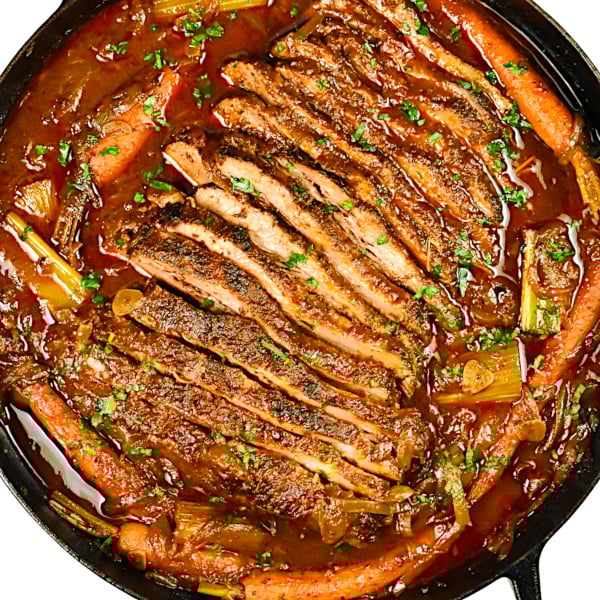
Jewish-Style Braised Brisket (Best Passover Brisket Recipe)
Jewish-style braised brisket is slow cooked until tender in a rich, savory sauce. A comforting holiday classic perfect for Passover and family gatherings.
Ingredients
Seasoning the brisket
- 4 to 5 pounds beef brisket (flat cut)
- 2 teaspoons salt
- 2 teaspoons pepper
- 1 teaspoon garlic powder
- 1 tablespoon dried oregano
- 1 tablespoon dried thyme
Braising the brisket
- 1 (14oz) can tomato sauce
- ¼ cup tomato ketchup
- 1 cup beef broth
- 2 tablespoons Worcestershire sauce (see note)
- 1 teaspoon paprika
- 3 tablespoon oil
- 2 onion, sliced
- 4-5 cloves garlic, sliced
- 1 cup red wine
- 3 celery stalks, cut into large chunks
- 6-7 small to medium carrots (we keep them whole)
- 2 bay leaves
- 8-9 sprigs fresh thyme
Instructions
- Preheat oven to 300°F. Pat the brisket dry thoroughly with paper towels so it sears properly.
- In a small bowl, mix salt, pepper, garlic powder, oregano and thyme. Sprinkle this rub all over the brisket and press it in well so it sticks to every side.
- In another bowl, whisk together tomato sauce, ketchup, beef broth, Worcestershire sauce and paprika until smooth. Set aside.
- Heat oil in a large cast iron skillet or Dutch oven over medium-high heat. Place the brisket in and sear on both sides until deeply browned, about 6-7 minutes per side. Remove and set aside.
- In the same pot, add sliced onions and cook, stirring occasionally, until soft and lightly caramelized, about 8-10 minutes. Add garlic and cook for about 1 minute, just until fragrant.
- Pour in the red wine and scrape up all the browned bits from the bottom of the pot. Let it simmer for 2-3 minutes to reduce slightly.
- Add celery, carrots, bay leaves and fresh thyme. Season with salt and pepper and then return the brisket to the pot, nestling it into the vegetables.
- Pour the prepared sauce all over the brisket so it is mostly covered. Bring everything to a gentle simmer, then cover.
- Transfer to the pre-heated oven and braise for about 3½ to 4 hours, until the brisket is fork tender.
- Remove the brisket and let it rest for 10 minutes. Slice against the grain, then return the slices to the sauce and spoon it over before serving.
Notes
- Worcestershire sauce: While many brands of Worcestershire sauce are labeled "kosher," they may contain anchovies. If you follow strict Jewish dietary laws, which forbid mixing meat and fish, you can use a vegetarian variety of Worcestershire sauce.
Nutrition Information
Yield 12 Serving Size 1Amount Per Serving Calories 571Total Fat 42gSaturated Fat 15gUnsaturated Fat 27gCholesterol 142mgSodium 717mgCarbohydrates 8gFiber 2gSugar 3gProtein 40g
Nutrition information is automatically calculated, so should only be used as an approximation.

Welcome to GypsyPlate! I'm Alpana, former worldwide tour manager and professional caterer, now full time blogger. I love exploring cuisines from around the world, and my recipes have been featured on sites such as MSN, Parade, Brit + Co, CNET and AOL. You can explore my entire collection of sortable recipes in my Recipe Index or learn more about me here.
Get griddling! Try these Blackstone Recipes!
Never miss a recipe!
Join the GypsyPlate mailing list and get easy dinner recipes right in your mailbox. From homestyle comfort food to exotic dishes from around the world.