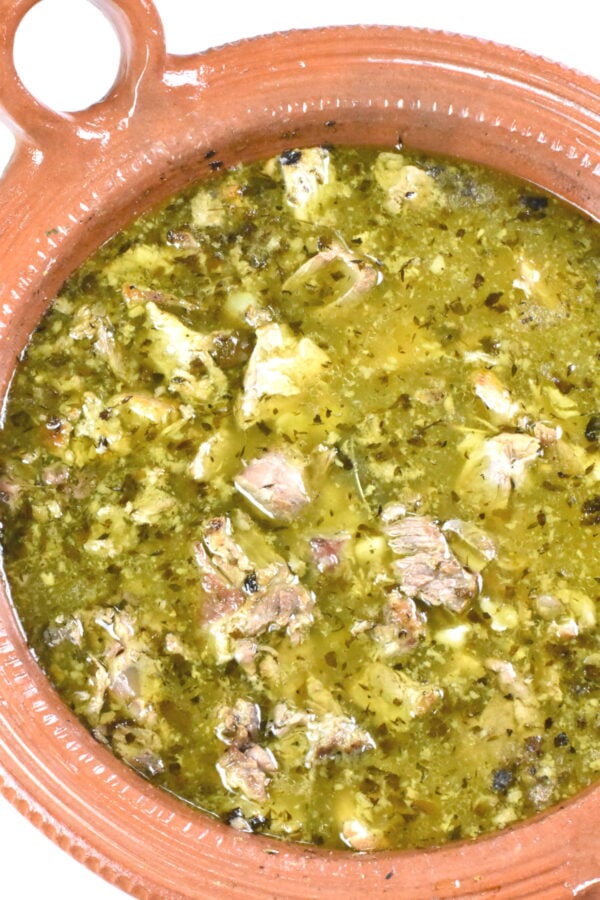
Pozole is a Mexican classic that’s been showing up at tables for generations, and once you’ve had it, you understand exactly why. Big pot on the stove, pork slowly simmering, you keep wandering back to it just to check on things… this is exactly the kind of meal I get excited about. This Pozole Blanco is simple at its core, but the flavor says otherwise.
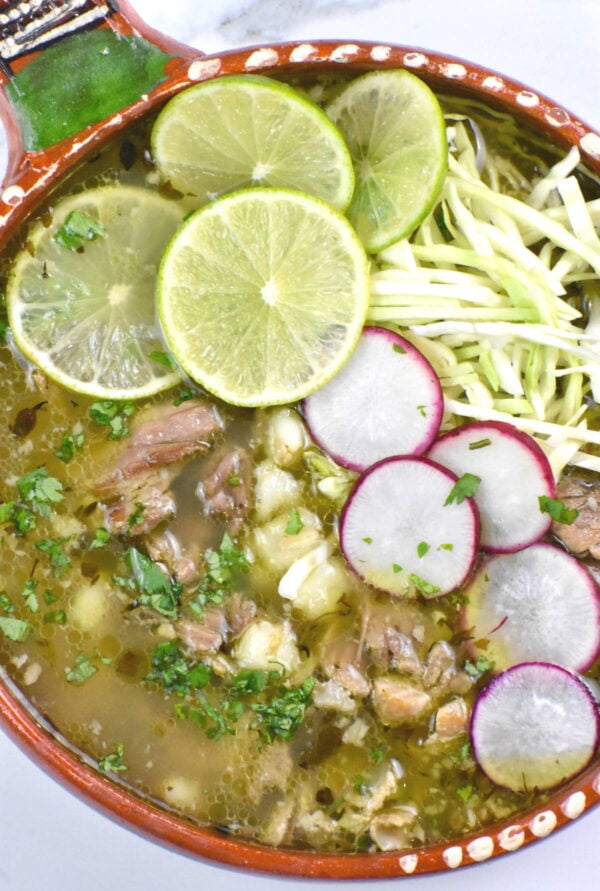
It’s all about patience here. The pork cooks low and slow until it’s fall-apart tender, the hominy soaks up all that goodness, and the broth turns into something deeply satisfying without needing much fuss. No heavy sauces, no distractions… just clean, comforting flavor done right.
And then comes the best part. Pile on the toppings… crunchy cabbage, radishes, cilantro, a good squeeze of lime,some drizzle of some hot salsa… and suddenly every bowl has its own personality.
This is the kind of food that doesn’t need an introduction at the table. One spoonful in, and everyone already knows what’s up. Pozole time!!
Pozole
After making this one, I couldn’t help but think back to the other two that already live on GypsyPlate. My Pozole Rojo was all about those deep, chili-driven flavors, bold and a little dramatic in the best way. Then came Pozole Verde, brighter, a little tangy, with that fresh, herby vibe that makes every bite pop.
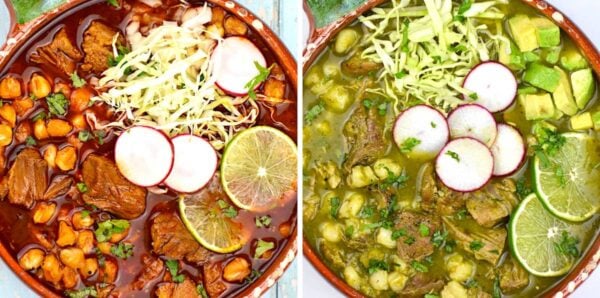
We’ve had some seriously good meals around those pots. Bowls loaded up, everyone building their own with toppings, going back for seconds before even finishing the first. And now this blanco version joins the lineup, and it fits right in. It’s a little more laid-back, a little more subtle, but don’t let that fool you. It holds its own just as easily, and honestly, it’s the one I find myself craving when I want something that feels a bit more classic and straightforward.
At this point, I’m convinced… no matter which version you make, pozole just knows how to turn any meal into something worth slowing down for.
What is Pozole Blanco?
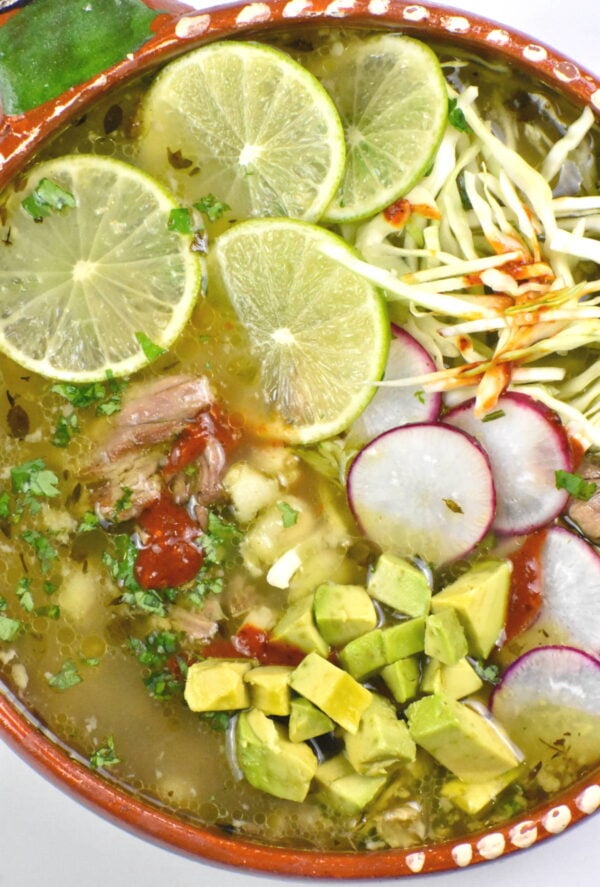
Pozole Blanco is the most traditional and stripped-back version of pozole, the one that really lets the foundation of the dish shine. No red chiles, no green sauce… just pork, hominy, and a long-simmered broth that builds flavor the old-school way. It’s especially popular in regions like Guerrero, and many consider it the original style before the rojo and verde variations came along. The broth stays clear and light, but it carries a depth that only comes from time and simple ingredients working together.
Pozole itself is one of Mexico’s most iconic dishes, with roots going all the way back to pre-Columbian times. At the center of it all is hominy, which is corn treated with an alkaline solution and cooked. That process gives it that signature chewy texture and distinct flavor that makes pozole, well… pozole. Traditionally made with pork, though chicken versions are common now, it’s simmered with garlic, onion, and herbs until the broth becomes the heart of the dish.
Over time, pozole evolved into three main styles. Blanco is the original, clean and focused, often served with salsas on the side so you can take it wherever you want. Rojo brings in dried red chiles like guajillo and ancho, giving it a deeper color and a more robust flavor. Verde leans fresh and bright, with tomatillos, cilantro, and green chiles bringing a slightly tangy kick. All three are completely different moods, but they’re built on the same idea.
Pozole isn’t just something people throw together on a random night. It’s tied to gatherings, celebrations, and big family meals. You’ll often see it during occasions like Mexican Independence Day, Christmas or other big family gatherings, but it’s a dish you can find year-round in many Mexican households, cooked in big pots to feed a crowd.

Ingredients Needed
For exact ingredient amounts, please see the recipe card at the end of this post. Here are the things you will need:
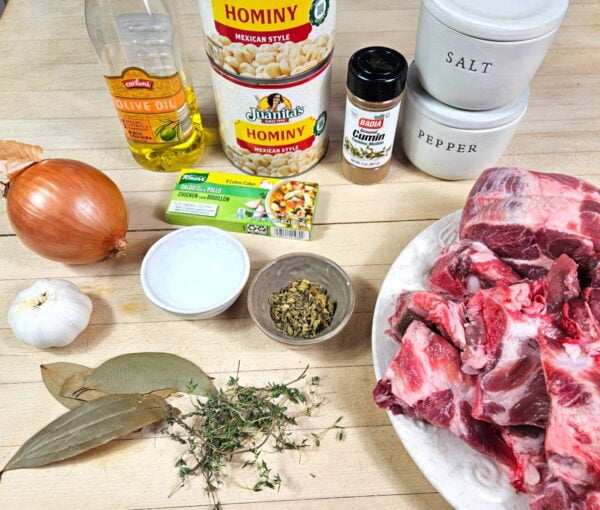
- Pork shoulder/pork butt – This is where a lot of your flavor comes from. Pork shoulder has that perfect balance of meat and fat, which breaks down during the long simmer into tender, juicy meat. Cut into big chunks.
- Pork neck bones – These are pure flavor builders too. They might not have a ton of meat, but they bring richness to the broth that you just won’t get otherwise. If you can’t find them, country style ribs or spare ribs work great too.
- Oil – Just a little to get that initial sear going. Any neutral oil works here, nothing fancy needed.
- Salt and pepper – Simple, but important. I season the pork well before searing so you build that base flavor right from the start, and then adjust again at the end.
- Onion – This goes into the blended base.
- Garlic – Lots of it.
- Bay leaves – These quietly do their job in the background, adding a little depth to the broth.
- Fresh thyme – If you don’t have it, you can use a teaspoon of dried thyme.
- Chicken bouillon cubes – They add that extra savory depth that makes the soup taste like it’s been cooking even longer than it has. You can use powder or a base if that’s what you have.
- Vinegar – Just a touch, but it makes a difference. It brightens everything up and balances the richness of the pork. I use white.
- Cumin – Adds a classic Mexican touch.
- Mexican oregano or regular oregano – If you can find Mexican oregano, use it. It has a slightly citrusy, more complex flavor. Regular oregano works just fine too, just a little different in profile.
- White hominy – The star alongside the pork. These are those big, puffy corn kernels that soak up all the broth. I like using canned for convenience, just make sure to rinse them well. Blending a little into the base helps thicken the broth slightly and ties everything together.
- Water – This is your broth base. You want enough to fully submerge the pork and give everything room to simmer properly.
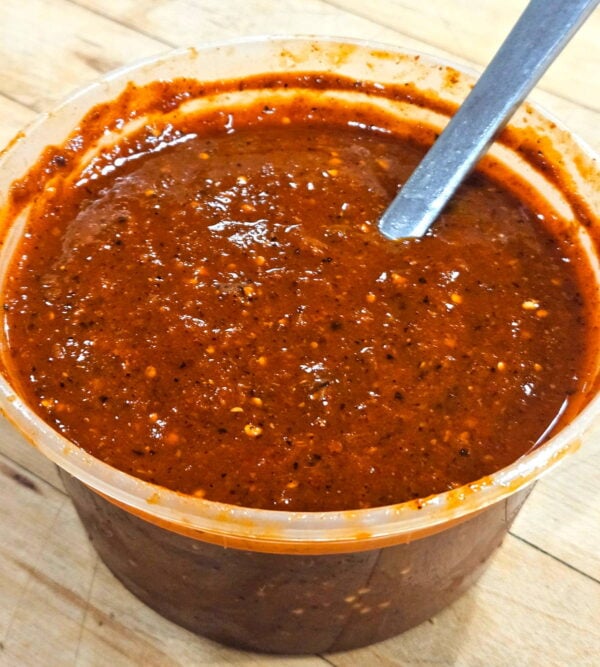
- Toppings (radishes, cabbage, avocado, cilantro, lime wedges, red chili salsa) – This is where every bowl comes alive. I load mine up with crunchy cabbage and radishes, creamy avocado, fresh cilantro, and a good squeeze of lime and finally some drizzle of chili salsa for little heat. (totally optional but I love it.)
How to Make Pozole Blanco
How pozole time happens in my kitchen? Slow and low… where you just let the pot do its thing and don’t rush it.
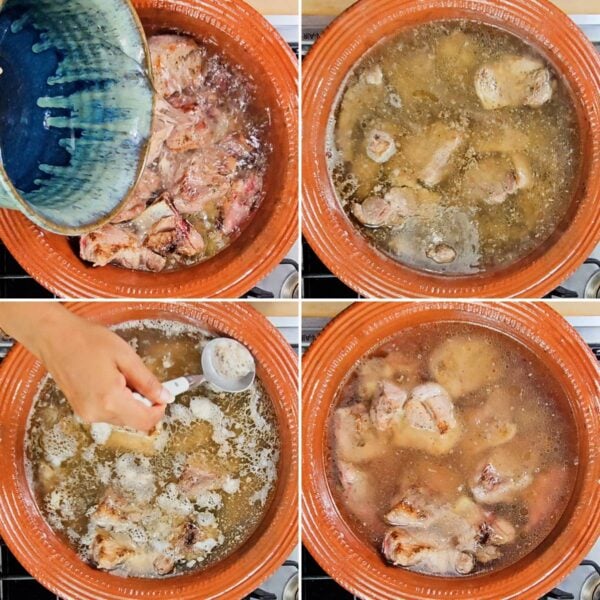
Sear pork: I start by getting a nice sear on the pork. Not a quick toss… I let it sit and really take on some color. That step alone sets the tone for everything that follows. Because it’s a lot of pork, I work in batches to avoid overcrowding.
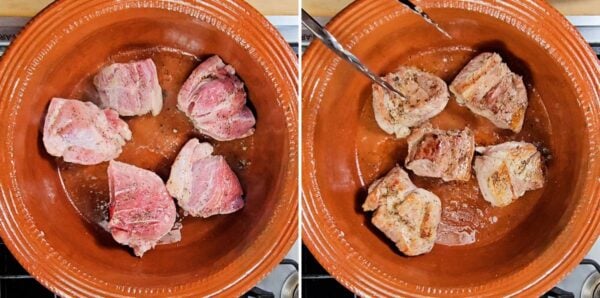
Simmer and skim: Once all the pieces are browned, then goes water, (make sure that all the pork is submerged in the water )and I bring it up gently. As it starts bubbling, I skim off whatever rises to the top. It’s a small step, but it keeps the broth looking clean and feeling light.
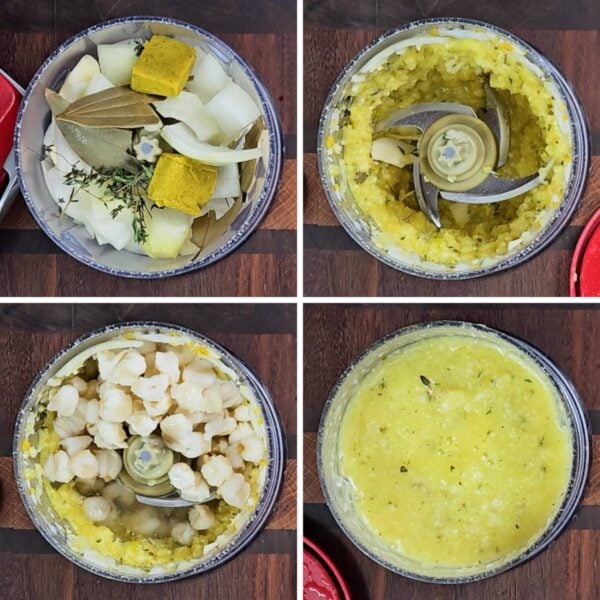
Make sauce base: While the pork is simmering, I blend up that base with onion, garlic, a bit of hominy, bay leaves, thyme, chicken bouillon, a splash of vinegar, and some water. It comes together into a smooth mixture.
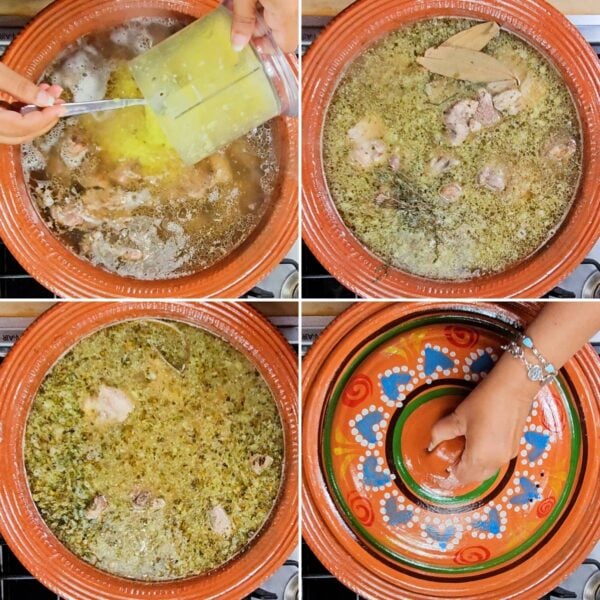
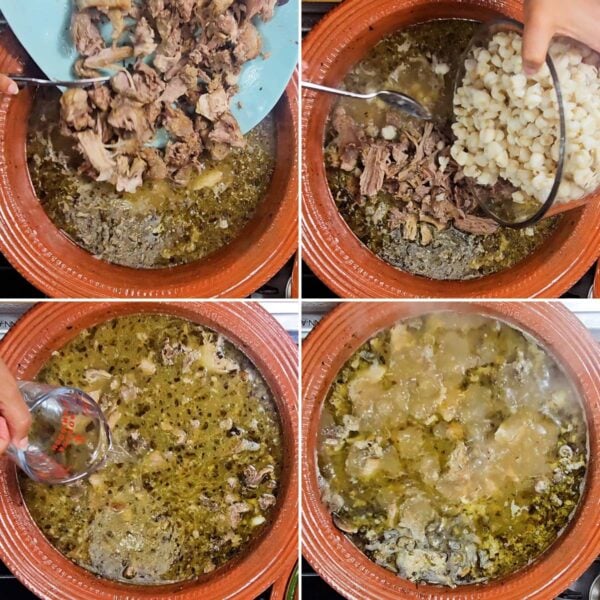
Season, cook till tender: Then I add the prepared paste, along with more bay leaves, remaining thyme, Mexican oregano and cumin. From there, it’s all about patience. I put on the lid and lit it simmer for and hour and a half, plus. Every now and then I check in, make sure everything is still comfortably submerged, and skim off anything extra floating on top.
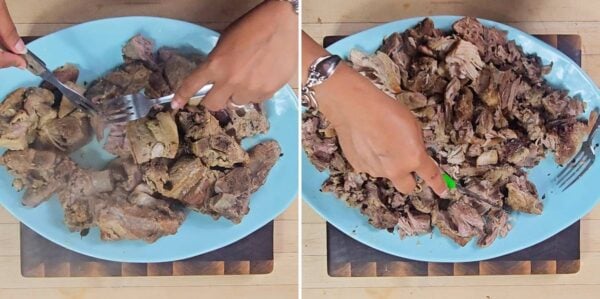
Shred pork: Once it’s ready, I pull the pork out, and shred it into pieces. Personally, I prefer it a bit chunkier, but you can shred to whatever size you desire.
Finish the pozole: Now I add back in the pork along with the rest of the hominy and a little extra water if needed. This is the time to taste and adjust for salt. Now just cover it back up, and cook for about another 30-40 minutes.
For serving, I go heavy on the cabbage and radishes for crunch, a little cilantro for freshness, avocado if for balance, and always a good squeeze of lime. Sometimes I add a drizzle of salsa for a little kick. Each bowl ends up slightly different, and that’s part of the fun.
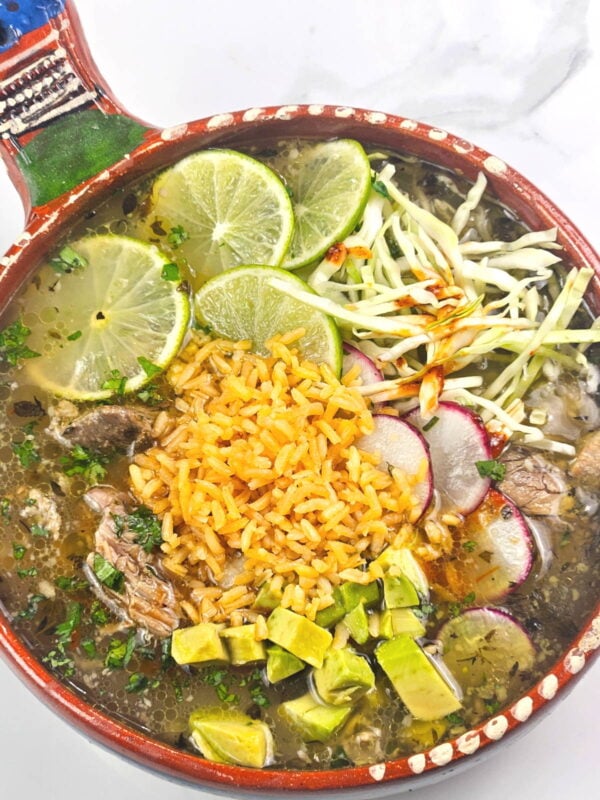
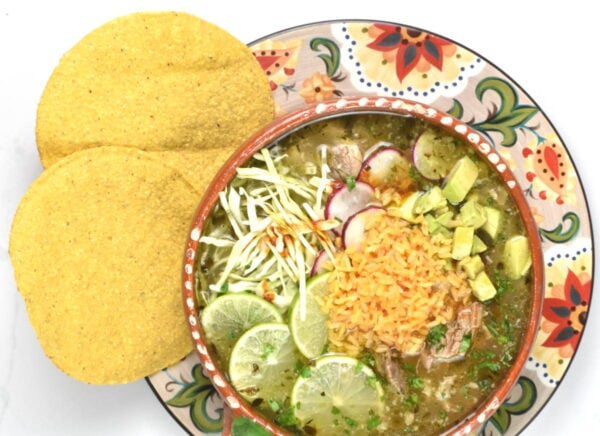
Serve it up with some warm tortillas, maybe some rice on the side, and just let everyone build their own.
Alpana’s Tips
- Sear properly at the start: That first step matters more than it seems. Let the pork sit and develop some color instead of moving it around too much. It builds a better base for everything that follows.
- Don’t rush the simmer: This isn’t the place to crank up the heat. A gentle, steady simmer is what gives you tender pork. If it starts boiling too hard, dial it back.
- Skim as you go: It takes a few extra minutes in the beginning and a couple of quick passes later, but it really makes a difference in how the final broth looks and feels.
- Blend a little hominy into the base: This is one of those small moves that pays off. It gives the broth just a bit of body without making it heavy.
- Taste at the end, not the beginning: With the bouillon and long simmer, the flavor changes as it cooks. I always adjust salt right before serving, not earlier.
Storage and Leftovers
This is one of those dishes that gets even better the next day. Let it cool, store it in the fridge, and the flavors settle in even more. It keeps well for 3 to 4 days.
If you’re planning ahead, you can also freeze it. I like to freeze it without the toppings, then just reheat gently on the stove and add fresh toppings when serving. You might need to add a little water when reheating to loosen it back up.
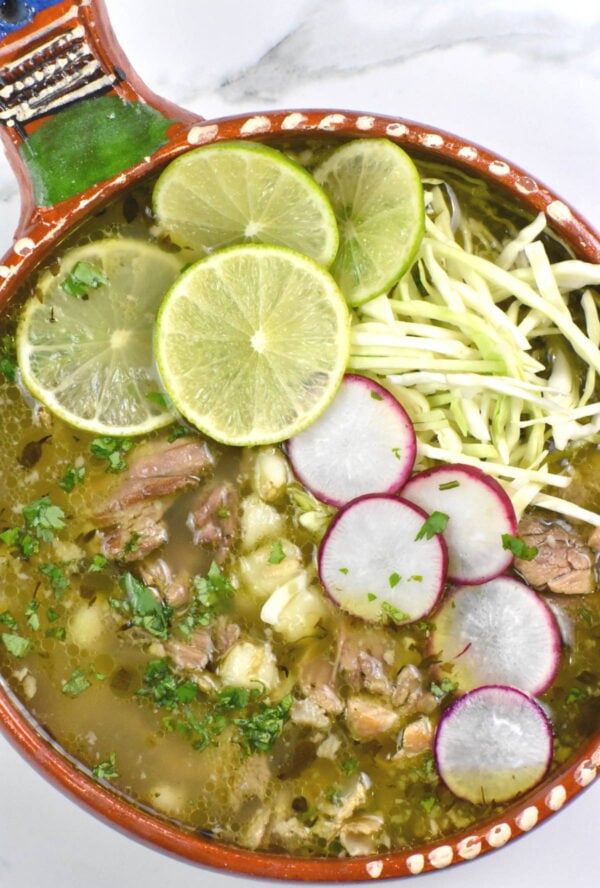
I’ve made Pozole Rojo, I’ve made Pozole Verde, and now this Pozole Blanco… and somehow I’m even more confused than before.
Every time I think I’ve picked a favorite, another one shows up and changes my mind. At this point, I’ve stopped trying to decide… I’ll just take whichever one is in front of me and call it my favorite that day. 🙂
Pozole Blanco, on our Gypsy Plate… enjoy!
More Mexican Soup Recipes:
Caldo de Pollo
Caldo de Res
Albondigas Soup
Sopa de Fideo
Sopa de Lentejas
Caldo de Camaron
Recipe Video

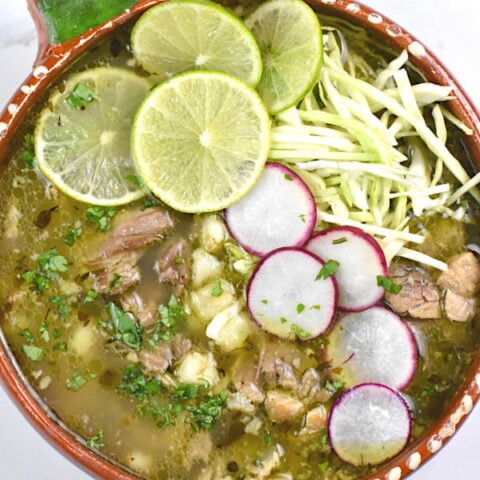
Pozole Blanco
Pozole Blanco is a classic Mexican soup with tender pork, hominy, and a rich, slow-simmered broth. Simple, comforting, and perfect for gatherings.
Ingredients
- 2.5 pounds pork shoulder or pork butt, cut into large chunks
- 2.5 pounds pork neck bones (you can sub with country style ribs or spare ribs)
- 2-3 tablespoons oil
- salt, to taste
- pepper, to taste
- ½ onion
- 4 bay leaves, divided
- 8 garlic cloves
- 10-12 fresh thyme sprigs, divided
- 2 chicken bouillon cubes
- 1 tablespoon white vinegar
- 2 25oz cans white hominy, drained and rinsed (divided)
- 1 teaspoon cumin
- 1 tablespoon Mexican or regular oregano
- 10-12 cups water
Toppings
- sliced radishes
- lime wedges
- thinly sliced cabbage
- avocado
- chopped cilantro
Instructions
- Season pork generously with salt and pepper. Heat oil in a large soup pot and sear the pork on all sides to golden brown. Do this in batches if needed.
- Add 10 cups of water, or more until all pork pieces are submerged nicely. Bring it to slow boil. As it simmers, skim any foam and impurities off the top until you get the clear broth. (This step will take about 10-15 minutes.)
- Meanwhile, blend onion, garlic, 2 bay leaves, 5-6 thyme sprigs, chicken bouillon cubes, vinegar, 1 cup hominy and 1 cup water. Blend it to a smooth paste.
- Once you get the clear broth simmering, add in the above blended paste and stir well. Add in cumin, oregano, and remaining fresh thyme sprigs and bay leaves. Simmer, covered, for 1.5 hours to 1 hour 45 minutes. Check periodically to make sure the pork is submerged under water. Towards the end, there might be more scum or oil floating on the top. Try to remove as much as possible to get a clear broth.
- Once the pork is tender after simmering, take it out and shred it into chunks of your desired size. Discard the bones. Remove bay leaves and any thyme remnants from the broth.
- Add shredded pork back into the pot along with remaining drained hominy. For a brothier pozole, you can add additional water at this time (I add about 2 cups). Cook for 30-40 additional minutes, covered. Taste and adjust for salt.
- Ladle the pozole blanco into bowls. Top with all the garnishes you wish, and serve with with lime wedges and warm corn tortillas, tostadas or Mexican rice.
Notes
- Sear properly at the start: That first step matters more than it seems. Let the pork sit and develop some color instead of moving it around too much. It builds a better base for everything that follows.
- Don’t rush the simmer: This isn’t the place to crank up the heat. A gentle, steady simmer is what gives you tender pork. If it starts boiling too hard, dial it back.
- Skim as you go: It takes a few extra minutes in the beginning and a couple of quick passes later, but it really makes a difference in how the final broth looks and feels.
- Taste at the end, not the beginning: With the bouillon and long simmer, the flavor changes as it cooks. I always adjust salt right before serving, not earlier.
- Leftovers: This is one of those dishes that gets even better the next day. Let it cool, store it in the fridge, and the flavors settle in even more. It keeps well for 3 to 4 days.
Nutrition Information
Yield 10 Serving Size 1Amount Per Serving Calories 580Total Fat 35gSaturated Fat 12gUnsaturated Fat 23gCholesterol 192mgSodium 341mgCarbohydrates 7gFiber 2gSugar 1gProtein 58g
Nutrition information is automatically calculated, so should only be used as an approximation.

Welcome to GypsyPlate! I'm Alpana, former worldwide tour manager and professional caterer, now full time blogger. I love exploring cuisines from around the world, and my recipes have been featured on sites such as MSN, Parade, Brit + Co, CNET and AOL. You can explore my entire collection of sortable recipes in my Recipe Index or learn more about me here.
Get griddling! Try these Blackstone Recipes!
Never miss a recipe!
Join the GypsyPlate mailing list and get easy dinner recipes right in your mailbox. From homestyle comfort food to exotic dishes from around the world.