This Yakitori Chicken is one of my favorite ways to turn simple chicken thighs into something truly special. Bite-sized pieces of juicy chicken are threaded onto skewers, grilled until lightly charred, then brushed again and again with a glossy homemade yakitori sauce.
That yakitori sauce is where the magic happens. It is sweet, savory and wonderfully rich. As it hits the hot grill, it caramelizes around the chicken and creates those irresistible sticky edges.
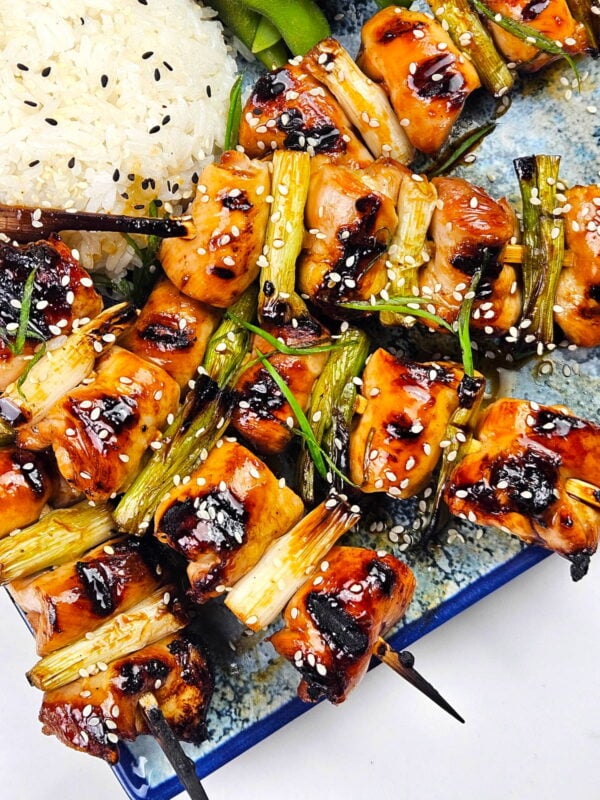
I love how easy this recipe is to recreate at home. Traditional yakitori is generally cooked over charcoal, but I make mine on a regular gas grill, and it still turns out fantastic.
If you enjoy Japanese restaurant flavors, these juicy little chicken skewers are going to be a huge hit!
What Is Yakitori?
Yakitori is a popular Japanese dish made by threading bite-sized pieces of chicken onto bamboo skewers and grilling them over high heat. The word yakitori comes from the Japanese words “yaki,” meaning grilled, and “tori,” meaning bird or chicken. Simply put, yakitori means grilled chicken.
In Japan, yakitori is commonly found in dedicated yakitori restaurants, izakayas and casual street-side stalls. Rather than using only boneless chicken meat, traditional yakitori cooks make use of many different parts of the bird, including thighs, wings, skin, liver, heart and cartilage.
You can also find similar Japanese skewers made with pork, beef, seafood and vegetables. Although they are sometimes casually grouped together with yakitori, these other grilled skewers are more accurately called kushiyaki.
The skewers are usually seasoned one of two ways. Shio yakitori is simply seasoned with salt, while tare yakitori is brushed with a sweet and savory yakitori sauce.
Today I am making an easy tare-style yakitori.
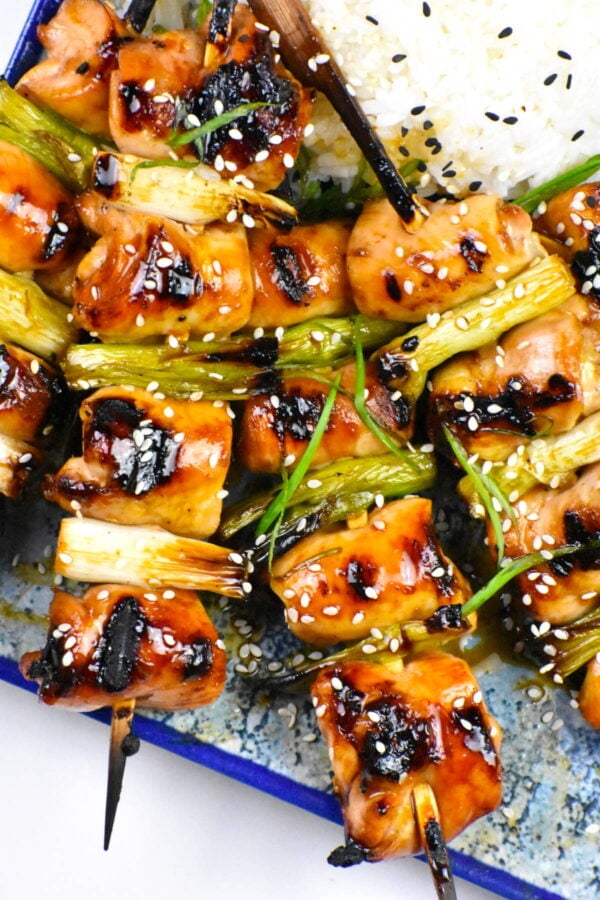
Why This Yakitori Chicken Is So Good
There is a lot of flavor packed onto these little skewers. Chicken thighs stay tender and juicy over the high heat of the grill, while the homemade tare cooks down into a beautifully glossy sauce.
This recipe is great for entertaining. The skewers cook quickly, look beautiful arranged on a platter and are easy for everyone to pick up and enjoy. Serve them as an appetizer, or add rice and a few simple sides to turn them into a complete meal.
What Does Yakitori Taste Like?
Yakitori has a wonderful combination of smoky, savory and lightly sweet flavors. The chicken develops charred edges from the grill, while the tare adds saltiness from the soy sauce, sweetness from brown sugar and a rich depth from the mirin and sake.
The sauce is similar to teriyaki sauce, but yakitori tare is generally reduced until it becomes more concentrated. It is brushed onto the chicken as it grills, creating a stickier and more deeply caramelized finish.
My version also has subtle notes of garlic, ginger and scallion. They give the sauce a little extra depth without overpowering that classic soy, mirin and sake base.
Ingredients Needed
You can find exact ingredient amounts in the recipe card at the end of this post. Here is what you will need:
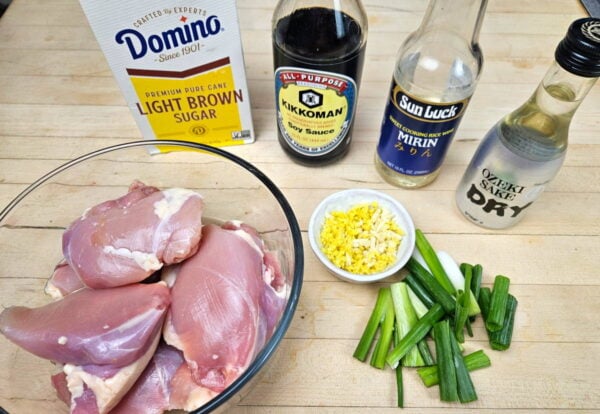
- Chicken – I am using boneless, skinless chicken thighs because they stay wonderfully tender and juicy over the high heat of the grill. Cut them into evenly sized pieces so they cook at the same rate. Chicken breast can also be used, but you need to watch it carefully because it can dry out more quickly.
- Soy Sauce – This makes the salty, savory and umami-rich foundation of the yakitori sauce. Regular all-purpose soy sauce works perfectly. You can use low-sodium soy sauce if you prefer less salt.
- Mirin – This sweet Japanese cooking wine adds mild sweetness. It is an important part of the classic yakitori sauce, so I do not recommend leaving it out.
- Sake – Sake balances the sweetness of the mirin and brown sugar while adding another layer of flavor. Cooking sake or an inexpensive drinking sake both work well.
- Brown Sugar – This balances the salty soy sauce and helps the tare caramelize around the chicken. It gives the finished skewers their wonderfully sticky edges.
- Garlic and ginger – Staple aromatics in many Asian recipes.
- Scallions – These go both in the sauce, and on the skewers.

How to Make Yakitori Chicken
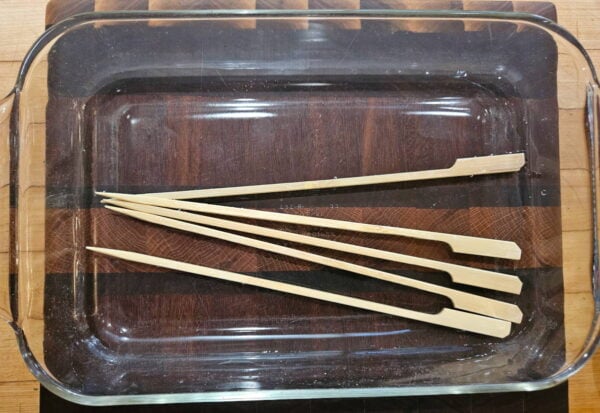
Prepare the Wooden Skewers: Before getting started, soak 8 to 10 short wooden skewers in water for at least 30 minutes.This helps keep the exposed portions from scorching too quickly on the grill.
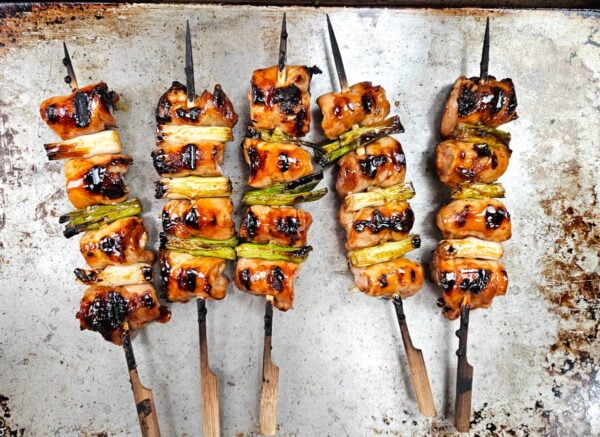
I like using Japanese-style bamboo paddle skewers, known as teppo-gushi. Their wide, flat handles make the skewers easier to hold and turn on the grill, while the flat shape helps keep the chicken from spinning around.
Make the Yakitori Sauce: Add the soy sauce, mirin, sake, water, brown sugar, garlic, ginger and scallions to a small saucepan. Bring everything to a gentle boil, stirring until the brown sugar has dissolved.
Reduce the heat and let the sauce simmer uncovered for 20 to 25 minutes. It should reduce by about one-third and lightly coat the back of a spoon.
Do not reduce it until it looks extremely thick in the saucepan. The sauce continues to thicken as it cools, and reducing it too far can make it overly salty.
Let it cool for about 10 minutes, then pour it through a fine-mesh strainer. Discard the garlic, ginger and scallions.
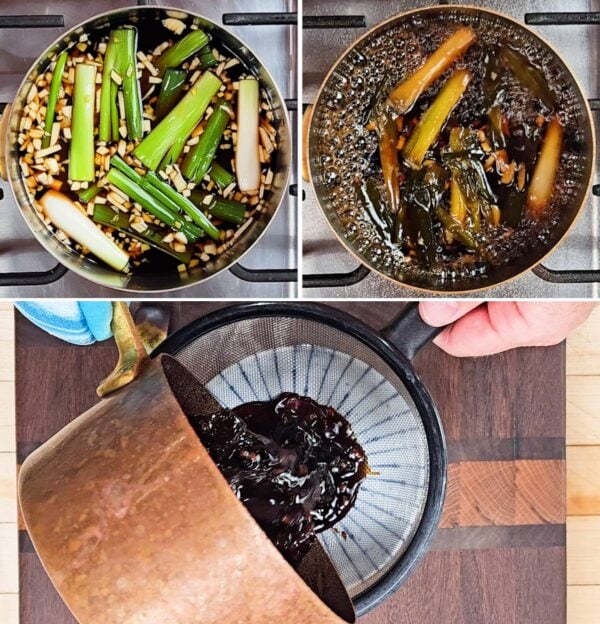
Set aside about half of the finished yakitori sauce for serving. Keep this portion completely separate from the sauce that will be used to brush the chicken.
Make Yakitori Skewers: Cut the chicken thighs into uniform pieces measuring about 1 to 1½ inches. Cut the white and light green parts of the scallions into similarly sized pieces. Thread the chicken and scallions alternately onto the soaked skewers, packing them fairly snugly together.
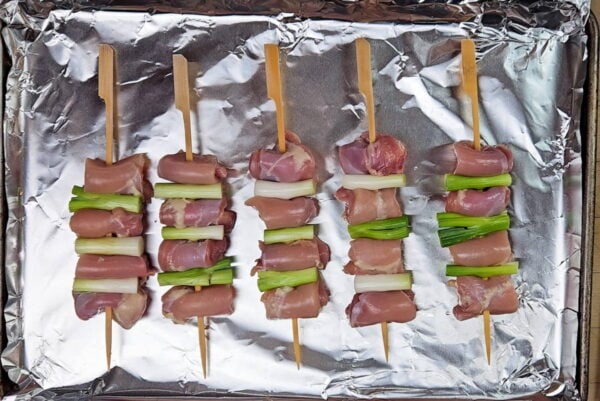
Grill the Yakitori: Preheat your grill to medium-high heat, around 400°F. Clean the grates well and lightly oil them to prevent the chicken from sticking.
Place the skewers on the hot grill and cook for 3 to 4 minutes. Flip them begin brushing the skewers with the yakitori sauce. Continue grilling, turning and brushing frequently, until the sauce caramelizes and the chicken reaches an internal temperature of 180°F (165°F if you are using chicken breast).
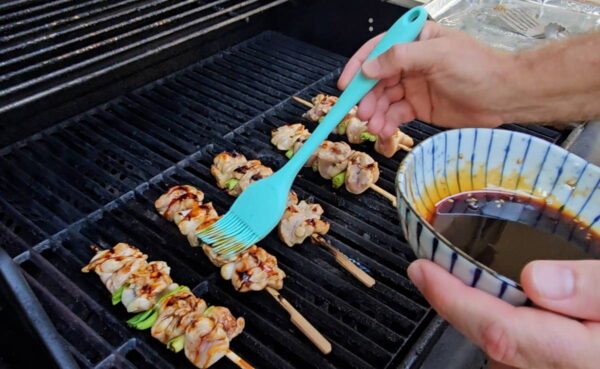
Transfer the skewers to a platter and let them rest for a few minutes. Give them one final brushing with some of the clean reserved sauce, then serve the remaining sauce on the side.
Alpana’s Top Tips
- Cut the chicken into evenly sized pieces. If some pieces are much larger than others, the smaller ones can dry out before the larger ones are fully cooked.
- Watch the sauce carefully while it simmers. It should lightly coat a spoon but still be pourable. It thickens considerably as it cools.
- Always divide the sauce before brushing the raw chicken. The reserved portion must remain clean if you plan to use it as a finishing glaze or dipping sauce.
- Turn and brush the skewers frequently once you begin adding the sauce. Several thin layers will stick better than one heavy coating, which will tend to drip off the skewers.
- Keep the grill near medium-high rather than cranking it up as hot as possible. You want enough heat to char the chicken, but not so much that the sugary glaze immediately burns.
Can I Use Chicken Breast?
Yes, you can make yakitori with boneless, skinless chicken breast. Cut it into pieces about 1 to 1½ inches thick and watch the cooking time carefully.
Chicken breast is leaner than thigh meat and can dry out more easily, so remove it from the grill as soon as it reaches 165°F. For the most flavorful and forgiving yakitori, chicken thighs are still my first choice.
Can Yakitori Be Made Without a Grill?
Yes. Arrange the skewers on a foil-lined baking sheet and cook them under the broiler, keeping them several inches away from the heating element.
Turn the skewers as the chicken cooks, then brush them repeatedly with the sauce during the final few minutes. Stay nearby because the glaze can go from beautifully caramelized to burned very quickly under the broiler.
You can also cook the chicken in a large skillet or grill pan. It will not have quite the same smoky flavor, but it will still be juicy and delicious.
What to Serve with Yakitori Chicken
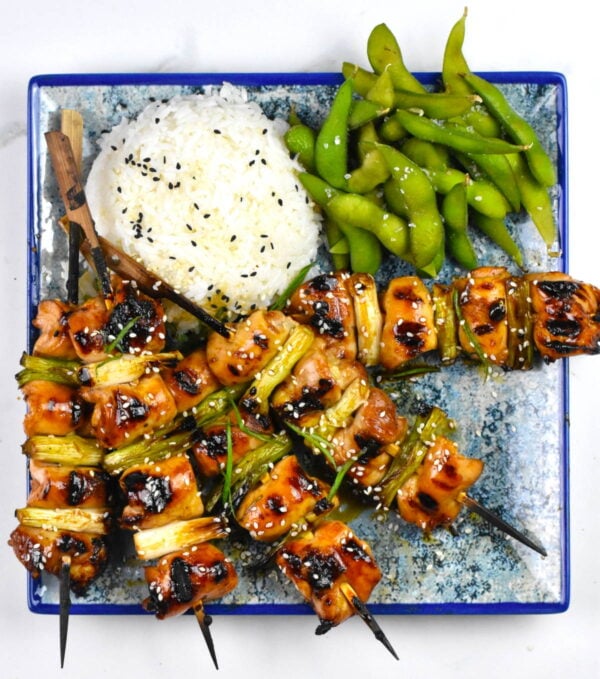
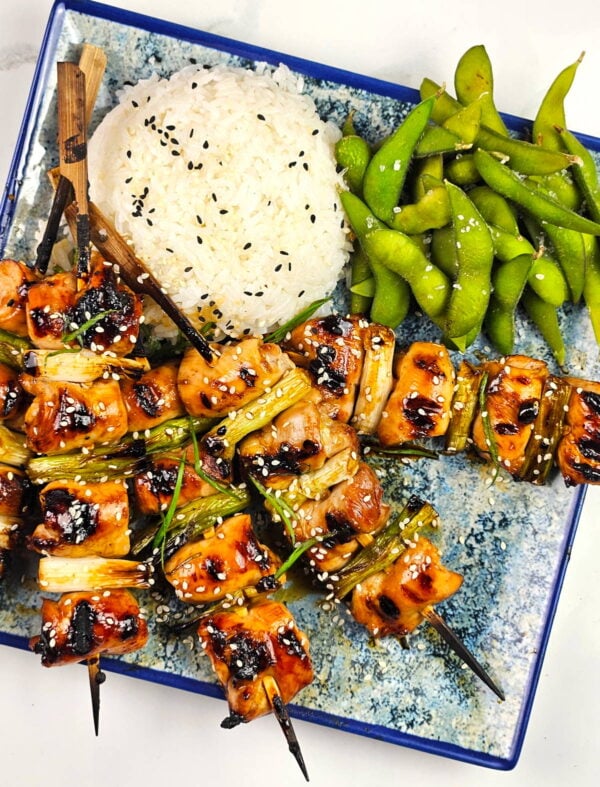
Steamed white rice is my favorite accompaniment because it soaks up every drop of that sweet and savory sauce. Japanese fried rice or simple noodles would also be excellent.
For something fresh, serve the skewers with a cucumber salad, Asian slaw or steamed edamame. Grilled vegetables such as mushrooms, zucchini, eggplant or shishito peppers also fit perfectly with the meal.
Yakitori makes a wonderful appetizer or party snack as well. Arrange the skewers on a platter, brush them with a little extra sauce and scatter sliced scallions over the top.
How to Store and Reheat Leftovers
Remove the chicken from the wooden skewers and transfer it to an airtight container. Refrigerate it for up to three days.
The chicken can be reheated in a lightly oiled skillet over medium heat or in the microwave. Add a spoonful of reserved yakitori sauce while reheating to restore that glossy coating and keep the chicken moist.
Leftover yakitori is also delicious served over rice, tucked into lettuce wraps or added to a noodle bowl.
The yakitori sauce can be made ahead of time and refrigerated in a sealed container. Since the reserved sauce has never touched raw chicken, it will keep well for about one week. It may thicken in the refrigerator, but a few seconds in the microwave or a splash of water will loosen it.
Try This Japanese Grilled Chicken!
Every time I make these Yakitori Chicken skewers, it is hard to stop picking them straight off the platter. The chicken stays beautifully juicy, the edges get just the right amount of char, and that sauce packs in so much sweet and savory flavor.
Best of all, you do not need a special Japanese charcoal grill to make them. A regular backyard grill works wonderfully, making this an easy recipe for summer cookouts, casual get-togethers or any night you feel like bringing some Japanese flavors to the table.
Make a batch, serve it with some rice and do not forget to keep extra sauce nearby. These sticky little skewers disappear fast!
Try these other chicken skewers:
Pinchos de Pollo
Teriyaki Chicken Skewers
Greek Chicken Souvlaki
Shish Tawook
Chicken Tikka
Recipe Video

Chicken Yakitori (Recipe + Video)
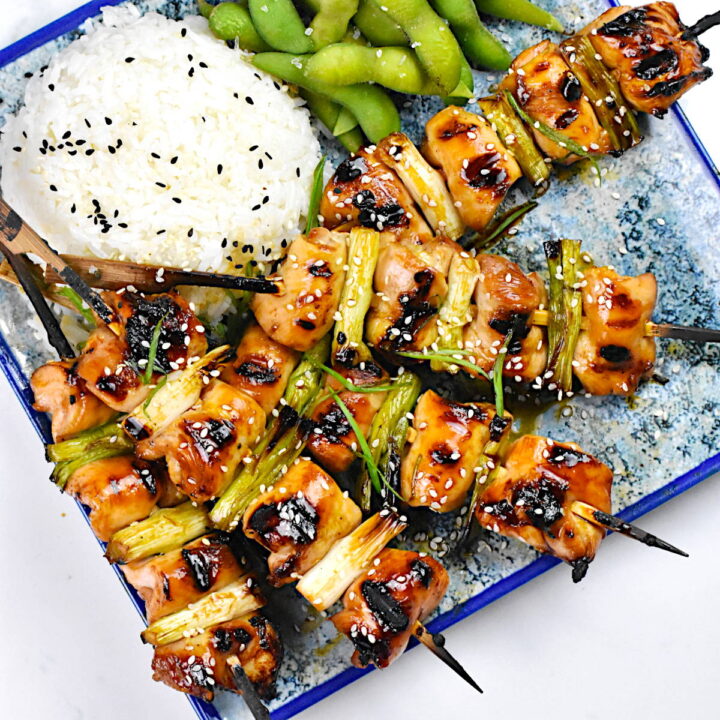
Yakitori Chicken features juicy chicken thighs and scallions grilled on skewers and brushed with a sweet, savory homemade sauce until glossy and caramelized.
Ingredients
Yakitori Sauce
- ½ cup soy sauce
- ½ cup mirin
- ¼ cup sake
- ¼ cup water
- 3 tablespoons brown sugar
- 2 garlic cloves, chopped
- 1 tablespoon fresh ginger, peeled and chopped
- 3 scallions, cut into large stalks
Yakitori
- 1.5 to 2 pounds of boneless, skinless chicken
- 3 scallions, cut into large stalks
Instructions
- Soak 8 to 10 short wooden paddle skewers in water for at least 30 minutes. These small Japanese-style skewers have flat handles, making them easy to turn while helping prevent the chicken from spinning.
- Add the soy sauce, mirin, sake, water, brown sugar, garlic, ginger and scallions to a small saucepan. Bring to a gentle boil over medium-high heat, stirring until the sugar dissolves.
- Reduce the heat to medium-low and simmer uncovered for 20 to 25 minutes, or until the sauce reduces by about one-third and lightly coats the back of a spoon.
- Remove the sauce from the heat and cool for 10 minutes. Strain through a fine-mesh strainer and discard the garlic, ginger and scallions. Keep in mind that the sauce thickens more as it cools.
- Cut the chicken into uniform 1 to 1½-inch pieces. Thread the chicken and scallion pieces alternately onto the soaked skewers, packing them fairly snugly together.
- Reserve about half of the Yakitori Sauce for serving. Keep it separate so it does not come into contact with the raw chicken.
- Preheat the grill to medium-high heat, around 400°F. Clean and lightly oil the grill grates.
- Place the skewers on the hot grill and cook for 3 to 4 minutes. Flip them begin brushing the skewers with the yakitori sauce. Continue grilling, turning and brushing frequently, until the sauce caramelizes and the chicken reaches an internal temperature of 180°F (165°F if you are using chicken breast).
- Transfer the skewers to a serving platter and let them rest for a few minutes. Brush with some of the reserved clean sauce and serve the remaining sauce on the side for dipping.
Notes
- Cut the chicken into evenly sized pieces. If some pieces are much larger than others, the smaller ones can dry out before the larger ones are fully cooked.
- Watch the sauce carefully while it simmers. It should lightly coat a spoon but still be pourable. It thickens considerably as it cools.
- Always divide the sauce before brushing the raw chicken. The reserved portion must remain clean if you plan to use it as a finishing glaze or dipping sauce.
- Turn and brush the skewers frequently once you begin adding the sauce. Several thin layers will stick better than one heavy coating, which will tend to drip off the skewers.
- Keep the grill near medium-high rather than cranking it up as hot as possible. You want enough heat to char the chicken, but not so much that the sugary glaze immediately burns.
Nutrition Information
Yield 6 Serving Size 1Amount Per Serving Calories 393Total Fat 11gSaturated Fat 3gUnsaturated Fat 8gCholesterol 134mgSodium 1265mgCarbohydrates 20gFiber 1gSugar 17gProtein 46g
Nutrition information is automatically calculated, so should only be used as an approximation.

Welcome to GypsyPlate! I'm Alpana, former worldwide tour manager and professional caterer, now full time blogger. I love exploring cuisines from around the world, and my recipes have been featured on sites such as MSN, Parade, Brit + Co, CNET and AOL. You can explore my entire collection of sortable recipes in my Recipe Index or learn more about me here.
Get griddling! Try these Blackstone Recipes!
Never miss a recipe!
Join the GypsyPlate mailing list and get easy dinner recipes right in your mailbox. From homestyle comfort food to exotic dishes from around the world.