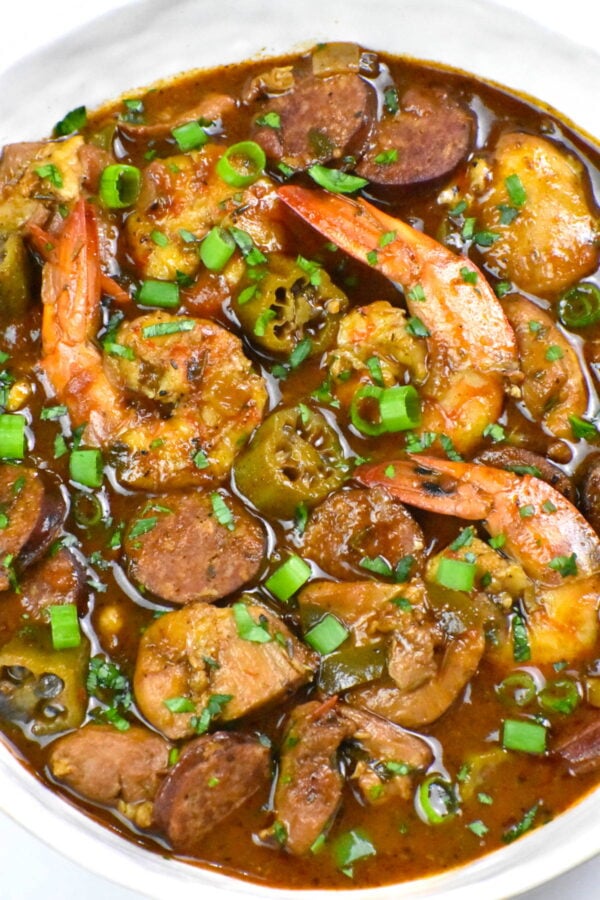
Creole Gumbo is one of the great food traditions of Louisiana cooking, and once you make a proper pot from scratch, it’s easy to understand why people in New Orleans take gumbo so seriously. That deep dark roux, smoky andouille sausage, tender chicken, Creole seasoning, and the holy trinity of onion, celery, and bell pepper all slowly simmer together into something unbelievably rich and comforting.
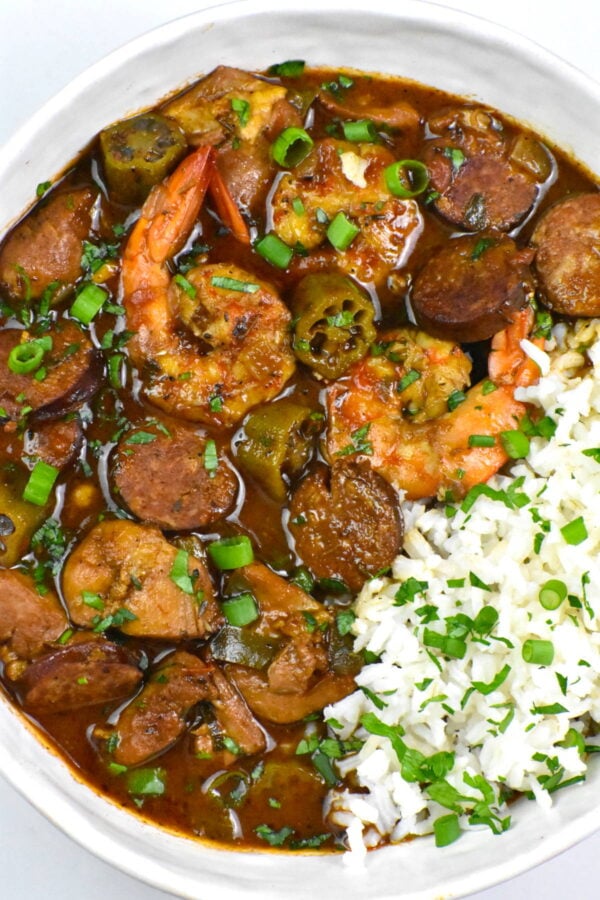
The very first time we tried authentic Gumbo was during our trip to New Orleans, and I still remember sitting there thinking, “How can something taste this deep and rich from such simple ingredients?” Somewhere between the smoky andouille sausage, the dark roux, and that unmistakable Creole seasoning, I completely fell in love with it.
Louisiana has a food culture unlike anywhere else in America. Everywhere you turn, there’s something incredible simmering, frying, blackening, or bubbling away in giant pots.
That New Orleans trip inspired so many recipes I’ve cooked for GypsyPlate over the years. From Jambalaya to Po’ Boys, E’touffée to Red Beans & Rice, I’ve been obsessed with recreating those bold flavors at home.
And now I’m so excited to finally give you my take on this world famous New Orleans Creole Gumbo!
What Is Creole Gumbo
Gumbo is one of the signature dishes of Louisiana. At its core, gumbo is a rich deeply flavored stew built from a roux along with stock, vegetables, meats or seafood, and bold seasonings slowly simmered together into one big comforting pot.
There are many different styles of gumbo across Louisiana, but the two most basic varieties are Creole Gumbo and Cajun Gumbo.
Creole Gumbo is most closely associated with New Orleans and often includes tomatoes along with seafood like shrimp, crab, or oysters. Cajun Gumbo, which comes more from the rural areas of Louisiana, usually skips the tomatoes and leans darker, smokier, and more rustic. Both styles typically start with a roux and the Louisiana holy trinity of onion, celery, and bell pepper.
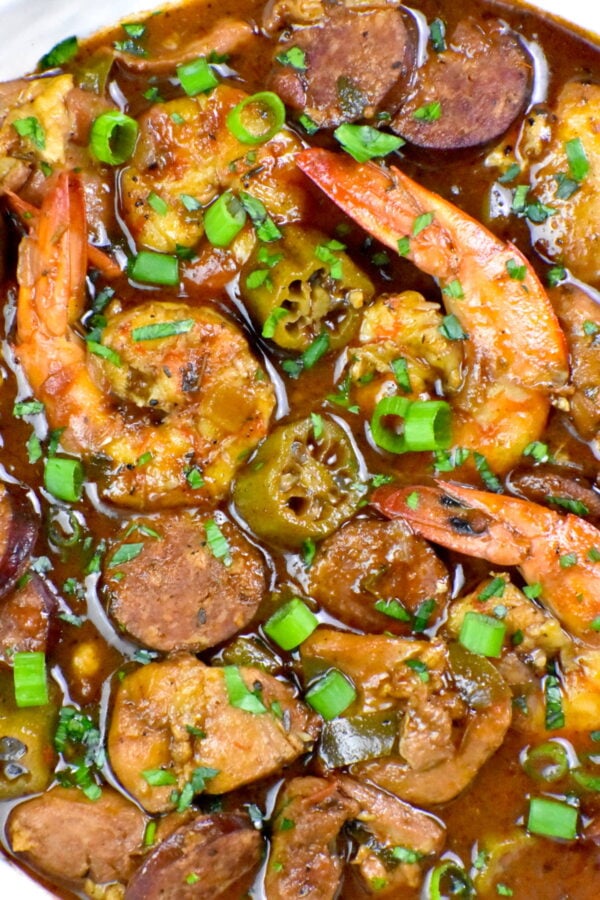
Like so much Louisiana food, gumbo reflects a blend of cultures that shaped the state over centuries. French, Spanish, African, Caribbean, and Native American influences all played a role in creating the gumbo we know today.
Even the word “gumbo” itself is believed to come from the West African word for okra, “ki ngombo” or “gombo,” brought to Louisiana through West African cooking traditions during the colonial era. Okra became one of the classic ingredients used to thicken gumbo, and over time the name stuck to the dish itself.
Today, gumbo has become so iconic that it is the official state food of Louisiana.
Ingredients Needed
You will find exact ingredient amounts in the recipe card at the end of this post. Here are the things you’ll need:
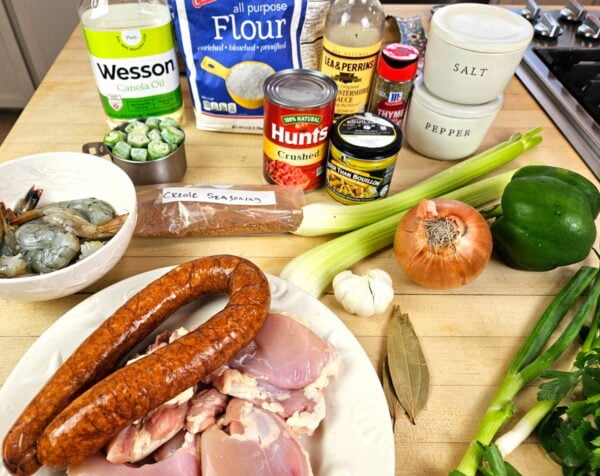
- Chicken – I am using boneless skinless chicken cut into medium sized chunks. Chicken thighs are especially great for gumbo because they stay juicy and tender during the long simmer, but you can use other cuts if your prefer.
- Andouille Sausage – This is one of the signature flavors in Creole gumbo. Smoky, slightly spicy andouille adds a huge amount of flavor to the broth.
- Shrimp – I like using peeled and deveined shrimp with the tails left on for extra flavor. The shrimp go in during the last few minutes of cooking so they stay perfectly tender and juicy.
- Oil and Flour – These two ingredients become the dark roux, which is basically the heart and soul of gumbo.
- Onion, Green bell pepper, and Celery – This combination is known as the Louisiana holy trinity and forms the flavor base of the gumbo.
- Garlic – Gumbo loves garlic, and I like to use plenty of it here.
- Creole seasoning – I highly recommend using my Homemade Creole Seasoning for this gumbo. It’s made with simple pantry staples you probably already have on hand, and the flavor is so much better balanced than many store bought versions. A lot of packaged Creole seasonings can be extremely salty, which can easily make the whole gumbo too salty by the time everything simmers together.
- Crushed tomatoes – One of the classic differences between Creole gumbo and many Cajun versions. Tomatoes add another layer of richness and help give Creole gumbo its distinct character.
- Thyme, Worcestershire sauce, Parsley, Bay leaves, Salt, and Pepper – All these ingredients slowly work together while the gumbo simmers, building layer after layer of flavor in the broth.
- Chicken Stock – Everything slowly cooks into this rich flavorful stock while the gumbo cooks low and slow.
- Okra – Besides adding flavor, okra also naturally helps thicken the gumbo slightly as it cooks. If you don’t like okra, you can add 2-3 teaspoons of gumbo filé after turning off the heat.
- Scallions and Extra Parsley – Fresh garnishes at the end brighten the whole pot and make every bowl look even better.

How To Make Gumbo
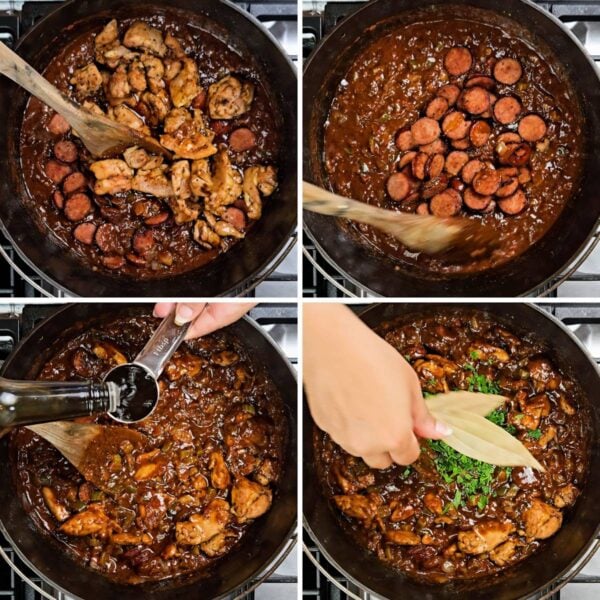
Brown meats: Gumbo starts long before the simmering. The very first layer of flavor comes from browning the andouille sausage until the edges get caramelized and smoky. After that, the chicken goes into the same pot with a little Creole seasoning so it picks up some color too.
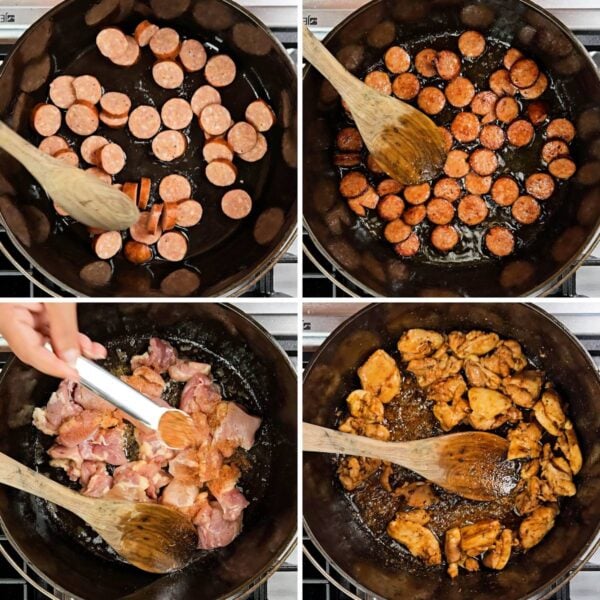
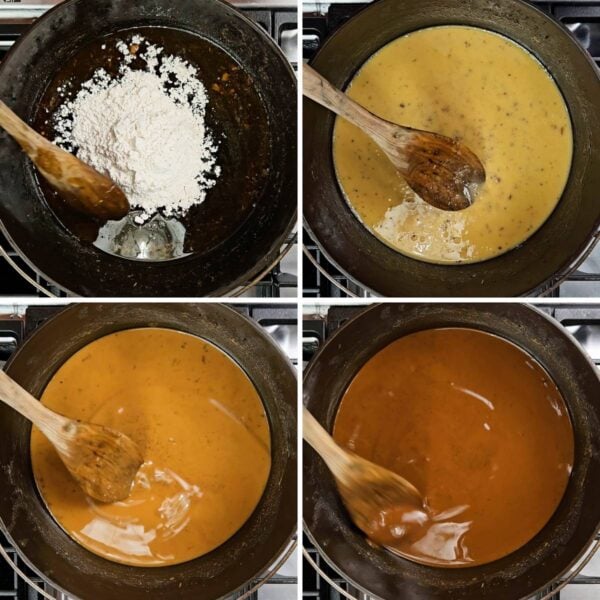
Build roux: Then comes the part everybody associates with gumbo… the roux.
After discarding the oil from browning the meats, fresh oil and flour slowly cook together until they turn the color of dark chocolate. It takes patience and constant stirring, usually around 25 to 35 minutes, but this is where gumbo gets so much of its deep rich flavor. As it cooks, the roux turns from golden to a dark, chocolatey color.
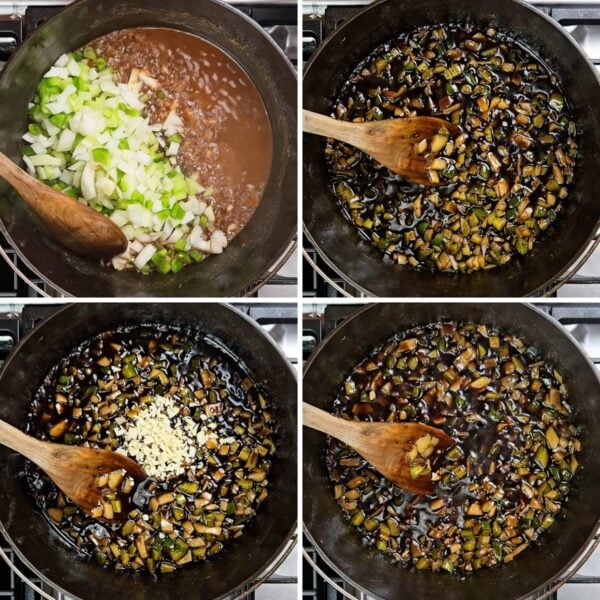
Add aromatics: Once the roux is ready, the holy trinity of onion, celery, and bell pepper goes into the pot. Once it has softened, the garlic goes in for a minute.
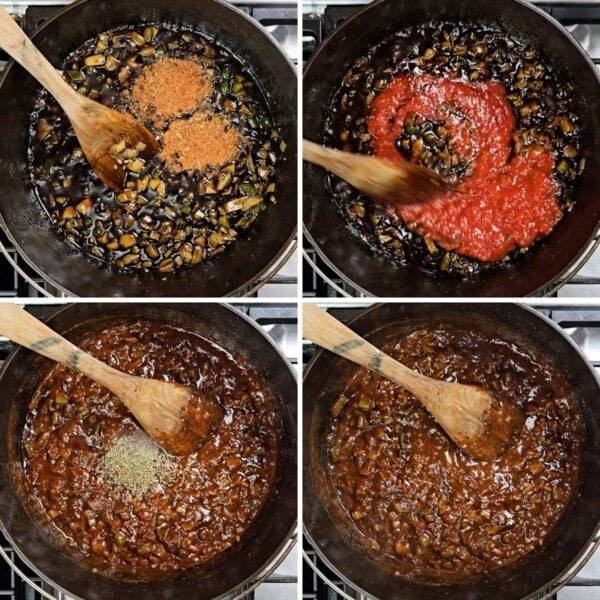
Build on the flavor. Next, the tomatoes, more Creole seasoning and thyme go in.
Add back in the meats: Now the chicken and sausage go back in the pot, along with Worcestershire sauce, chopped parsley and a couple of bay leaves.
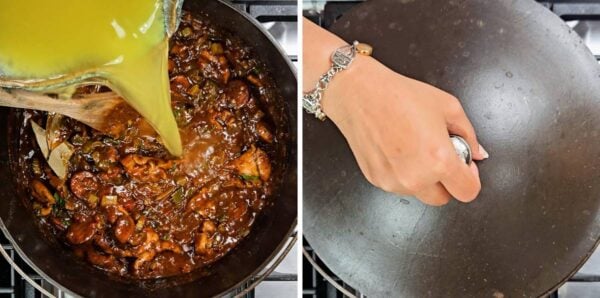
Add broth, simmer: Slowly pour in the chicken stock while stirring well so the roux fully blends into the broth without lumps. Bring the gumbo to a gentle boil.
Reduce the heat to low and simmer covered for 1 hour, stirring occasionally. This gives the chicken time to become tender while the flavors develop and deepen.
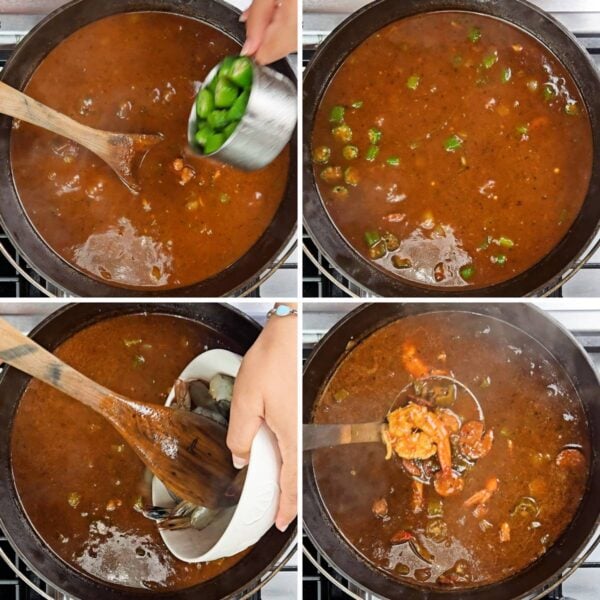
Finishing touches: The okra joins the pot later on so it softens without disappearing completely, while the shrimp only need the final few minutes at the end. Shrimp cook incredibly fast, so they only need the final few minutes in the pot to stay perfectly tender and juicy.
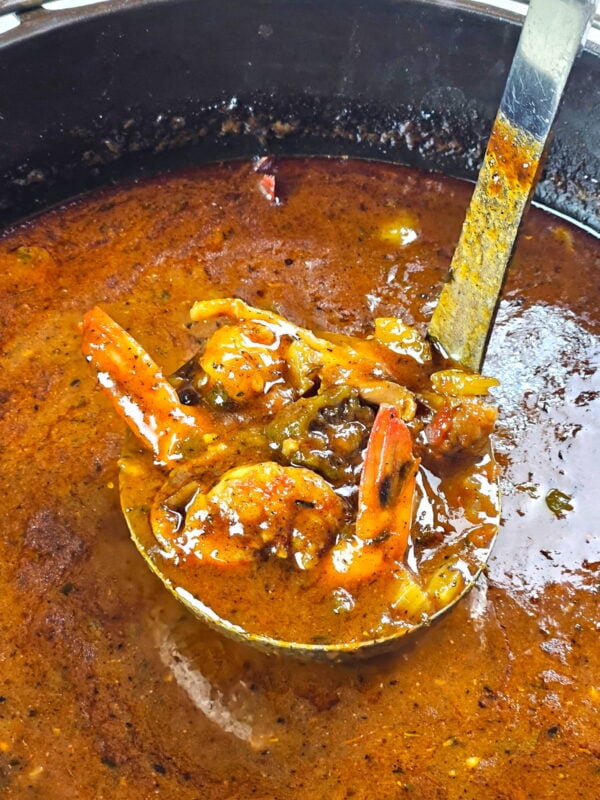
And then suddenly, after all that slow simmering and stirring, you’re standing there with a giant pot of authentic Creole gumbo ready for rice, scallions, hot sauce, and very serious second helpings.
Alpana’s Tips
- Give the roux your full attention: Once the roux starts turning medium brown, don’t walk away from the stove. Keep the heat around medium to medium low and stir constantly, making sure to scrape along the bottom and corners of the pot where it can burn first. The color changes slowly at the beginning, then suddenly starts darkening much faster toward the end. You’re looking for a deep chocolate brown color and a rich toasted nutty smell.
- Don’t stop the roux too early: A lighter roux will still work, but a proper dark roux gives gumbo that deeper richer Louisiana flavor that makes the whole pot taste more authentic.
- Use homemade Creole seasoning if possible: I really recommend my homemade Creole seasoning here. It’s made from pantry staples and gives you much better control over the salt level. A lot of store bought blends can make gumbo overly salty by the end of cooking.
- Shrimp go in last: They only need the final few minutes in the pot to stay tender and juicy. Overcooked shrimp can turn rubbery very quickly.
- Gumbo gets even better overnight: Like so many slow simmered dishes, the flavors deepen and blend together even more the next day. Leftover gumbo is a beautiful thing.
Variations
One of my favorite things about gumbo is how every Louisiana family seems to have their own version.
Some people make seafood gumbo loaded with crab, shrimp, oysters, or crawfish. Others stick with chicken and sausage only.
Some versions use okra, some use filé powder, and some use both depending on the family tradition and part of Louisiana.
You can also adjust the spice level however you like. A little extra cayenne or hot sauce can take things in a much spicier direction very quickly.
Serving Suggestions
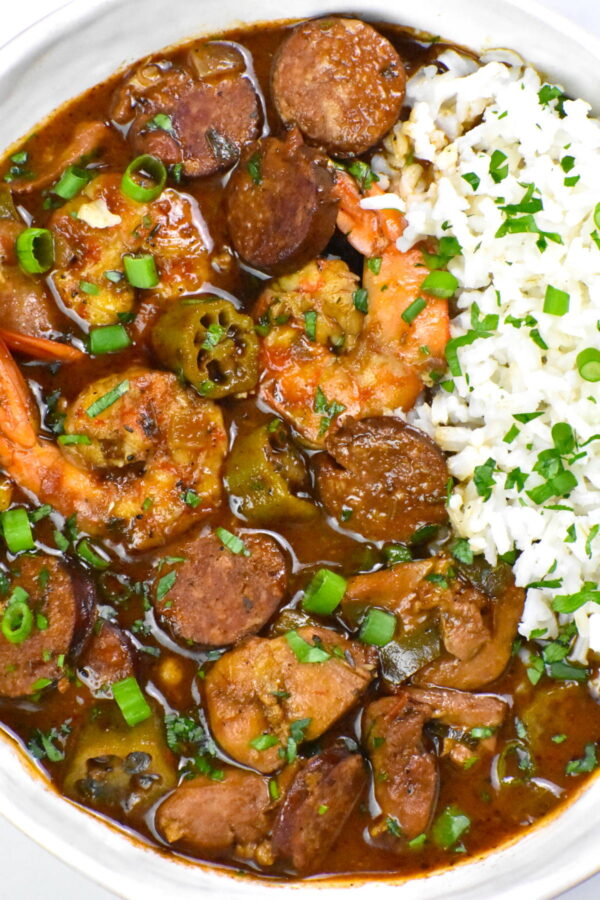
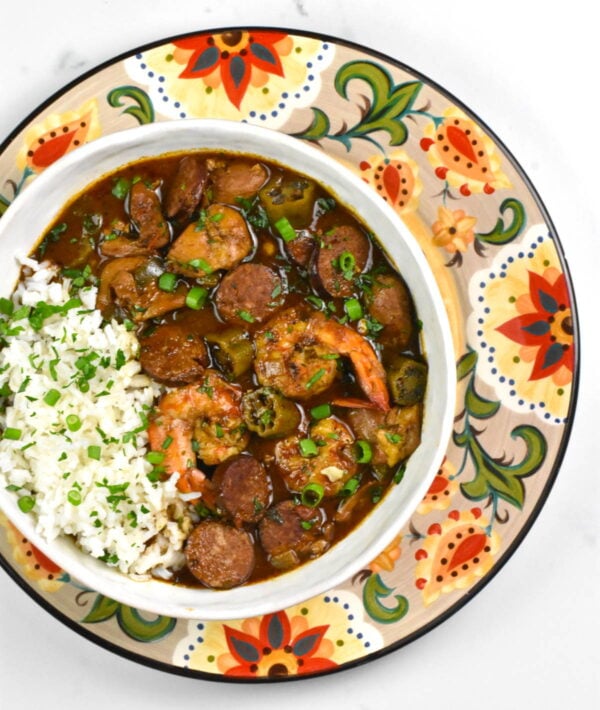
Creole Gumbo is traditionally served over fluffy white rice, which soaks up all that rich flavorful broth perfectly.
A piece of crusty bread or warm cornbread on the side is never a bad idea either, especially once you get toward the bottom of the bowl and start chasing every last spoonful.
And if you really want the full New Orleans mood, put on a little jazz music while the gumbo simmers away. Somehow it just feels correct.
Storage and Leftovers
Gumbo stores beautifully and honestly tastes even better the next day after all those flavors spend more time together.
Store leftovers in an airtight container in the fridge for up to 4 days.
It also freezes very well. I like freezing the gumbo separately from the rice so everything reheats nicely later on.
Frequently Asked Questions
Creole gumbo is usually associated with New Orleans and often includes tomatoes and seafood. Cajun gumbo, which comes from the bayou, usually skips tomatoes and leans darker and smokier.
Not always. Okra’s main purpose in this stew is to act as a thickener. Some gumbo recipes use okra, some use filé powder, and some use both depending on the tradition.
Absolutely. Gumbo is one of those dishes that becomes even better after sitting overnight.
Most of the time comes from properly developing the dark roux and letting all the flavors slowly simmer together.
A good Gumbo has a way of slowing everybody down a little. You sit around longer, conversations stretch out, second bowls start happening, and dinner turns into one of those nights where nobody seems in a hurry to leave the table.
And once that first spoonful hits the rice, suddenly it makes perfect sense why gumbo became one of the signature dishes of New Orleans and Louisiana cooking. Enjoy!
Creole Gumbo, on our Gypsy Plate… enjoy!
More Cajun and Creole Recipes:
New Orleans BBQ Shrimp
Jambalaya Pasta
Blackened Shrimp & Grits
Cochon de Lait
Shrimp Remoulade
Maque Choux
Dirty Rice
Recipe Video

Authentic Creole Gumbo
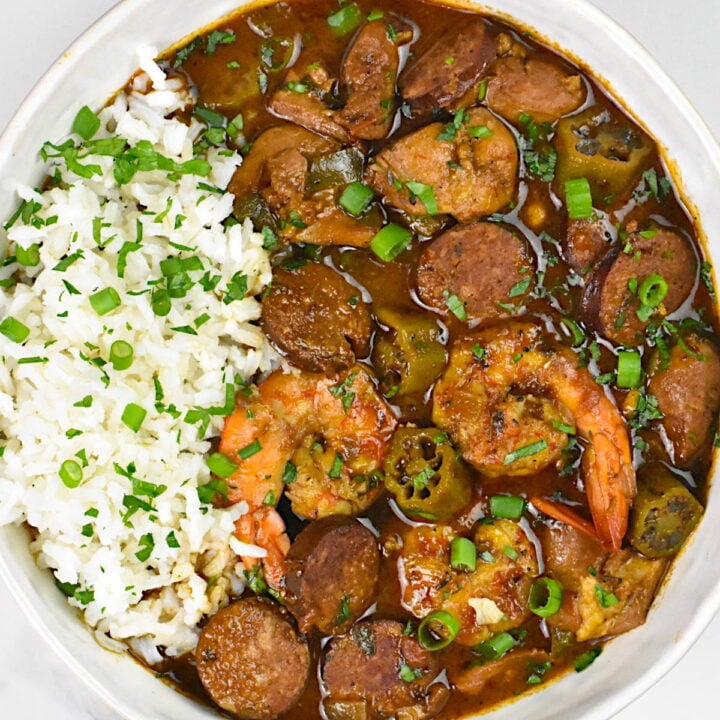
Learn how to make authentic Creole Gumbo with dark roux, chicken, andouille sausage, shrimp, tomatoes, and the Holy Trinity. A true New Orleans classic.
Ingredients
- ¾ cup + 2 tablespoons cooking oil, divided
- 14oz andouille sausage, sliced
- 1 pound boneless skinless chicken, cut into medium sized chunks
- 2 tablespoons +2 teaspoons Creole seasoning, divided
- ¾ cup all-purpose flour
- 1 onion, diced
- 1 green bell pepper, diced
- 2 celery, diced
- 6 garlic cloves, finely chopped
- 14oz canned crushed tomatoes
- 1 teaspoon dried thyme
- 1 tablespoon Worcestershire sauce
- 2 tablespoons fresh parsley, chopped + more for garnish
- 2 bay leaves
- 6 cups chicken stock
- 1 cup frozen okra pieces
- ½ pound shrimp, peeled and deveined with tails on
- salt, to taste
- pepper, to taste
- scallions, green part, sliced for garnish
Instructions
- Heat 2 tablespoons oil in a large heavy bottomed pot or Dutch oven over medium high heat. Add the sliced andouille sausage and cook until browned and lightly crisp around the edges. This helps render out all that smoky flavorful fat that becomes part of the gumbo base. Remove the sausage to a plate.
- Season the chicken with 2 teaspoons of Creole seasoning. Add the chicken pieces and sear until nicely browned on the outside. The chicken does not need to be fully cooked at this stage. Remove and set aside with the sausage.
- Discard the oil left in the pot from searing the meats. Add the remaining fresh 3/4 cup oil to the pot and place over medium heat. Slowly whisk in the flour to begin the roux. Stir constantly, scraping the bottom of the pot as it cooks. Continue cooking until it reaches a chocolate brown color, roughly 25 to 35 minutes depending on your heat level and pot. The roux should smell deeply nutty and toasted. If you see black specks or smell anything burnt, it’s best to start over, because burnt roux will make the whole gumbo bitter.
- Once the roux reaches that chocolate color stage, immediately stir in the onion, green bell pepper, and celery. Cook for 6 to 8 minutes until softened and coated in the roux.
- Add the garlic and cook another minute until fragrant. Stir in the remaining 2 tablespoons Creole seasoning, crushed tomatoes, thyme, Worcestershire sauce, parsley, bay leaves, browned sausage, and chicken.
- Slowly pour in the chicken stock while stirring well so the roux fully blends into the broth without lumps. Bring the gumbo to a gentle boil.
- Reduce the heat to low and simmer covered for 1 hour, stirring occasionally. This gives the chicken time to become tender while the flavors develop and deepen.
- Stir in the okra after the first hour of simmering. Continue cooking another 20 to 30 minutes until the okra is tender and the gumbo thickens slightly more.
- Add the shrimp during the final 10 minutes of cooking. Simmer just until the shrimp turn pink and perfectly tender.
- Taste and adjust salt and pepper as needed. Remove the bay leaves. Serve hot with rice and garnish with extra parsley and sliced scallions.
Notes
- Give the roux your full attention. Once the roux starts turning medium brown, don’t walk away from the stove. Keep the heat around medium to medium low and stir constantly, making sure to scrape along the bottom and corners of the pot where it can burn first. The color changes slowly at the beginning, then suddenly starts darkening much faster toward the end. You’re looking for a deep chocolate brown color and a rich toasted nutty smell.
- I really recommend my homemade Creole seasoning here. It’s made from pantry staples and gives you much better control over the salt level. A lot of store bought blends can make gumbo overly salty by the end of cooking.
- Besides adding flavor, okra also naturally helps thicken the gumbo slightly as it cooks. If you don’t like okra, you can add 2-3 teaspoons of gumbo filé after turning off the heat.
- Gumbo gets even better overnight. Like so many slow simmered dishes, the flavors deepen and blend together even more the next day. Leftover gumbo is a beautiful thing.
Nutrition Information
Yield 8 Serving Size 1Amount Per Serving Calories 694Total Fat 45gSaturated Fat 8gUnsaturated Fat 37gCholesterol 146mgSodium 2080mgCarbohydrates 35gFiber 3gSugar 8gProtein 38g
Nutrition information is automatically calculated, so should only be used as an approximation.

Welcome to GypsyPlate! I'm Alpana, former worldwide tour manager and professional caterer, now full time blogger. I love exploring cuisines from around the world, and my recipes have been featured on sites such as MSN, Parade, Brit + Co, CNET and AOL. You can explore my entire collection of sortable recipes in my Recipe Index or learn more about me here.
Get griddling! Try these Blackstone Recipes!
Never miss a recipe!
Join the GypsyPlate mailing list and get easy dinner recipes right in your mailbox. From homestyle comfort food to exotic dishes from around the world.