If you’ve never had Trinidad Chicken Pelau before, you’re in for something special. This classic Caribbean one-pot meal is loaded with juicy chicken, flavorful rice, and bold island seasonings, creating a hearty dinner that’s every bit as comforting as it is delicious
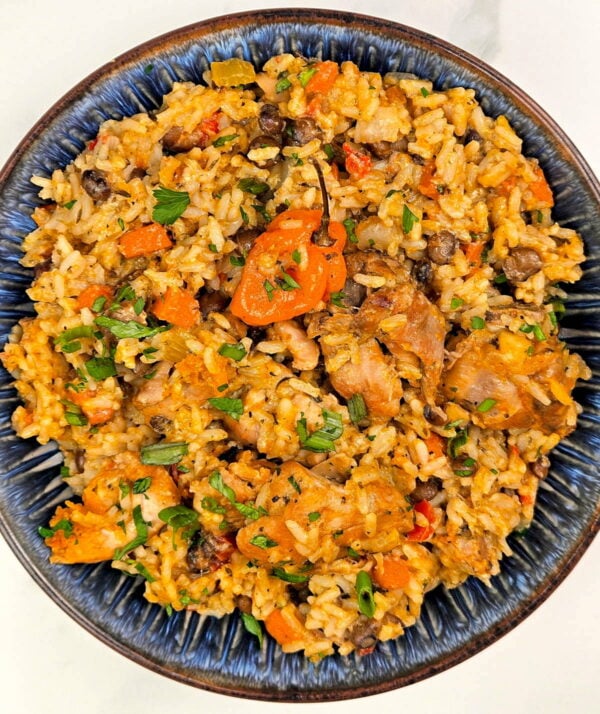
The first time I tried Trini Pelau, I couldn’t believe how many different flavors came together in one pot. It’s hearty enough to be a complete meal on its own, which is one of the many reasons families throughout Trinidad and Tobago have been making it for generations.
Once you master this recipe, you’ll understand why so many people consider it the ultimate Trinidadian comfort food.
What is Pelau?
Pelau (pronounced pay-LAO, with the second syllable rhyming with “wow”) is Trinidad and Tobago’s beloved one-pot rice dish made with seasoned chicken, rice, pigeon peas, coconut milk, vegetables, herbs, and spices.
Unlike many rice dishes where the meat is simply simmered with the rice, pelau begins by caramelizing brown sugar until it reaches a deep amber color. The chicken is then browned in this caramel, giving the finished dish its beautiful rich color and unmistakable depth of flavor.
As everything cooks together, the rice absorbs the juices from the chicken, coconut milk, herbs, and vegetables, creating a meal where every bite is packed with flavor.
While chicken pelau is the version most people know, you’ll also find pelau made with beef, pork, pigtails, shrimp, or even completely vegetarian versions throughout the Caribbean.
Is Pelau the National Dish of Trinidad and Tobago?
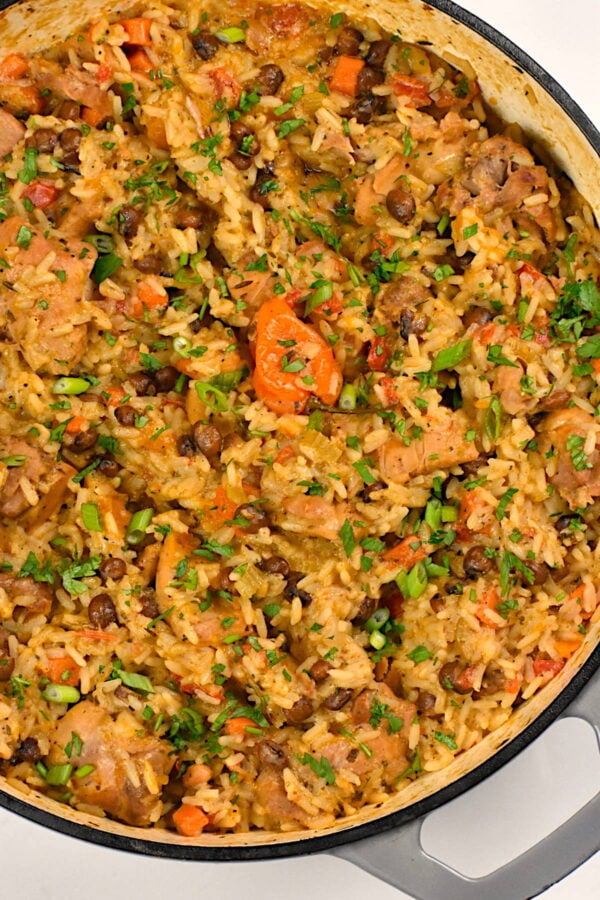
Many people proudly consider pelau to be the national dish of Trinidad and Tobago. While you’ll also hear this title given to crab and callaloo or doubles, pelau is one of the country’s most iconic and recognizable meals.
It’s the kind of food you’ll find everywhere, from family Sunday lunches and beach liming to birthday parties and holidays.
Ask ten Trinidadians for their pelau recipe and you’ll probably get ten different answers. Every family has its own traditions, favorite seasonings, and little tricks that have been passed down over the years.
What Makes Trinidad Pelau Different?
The magic of pelau comes from a few signature techniques that set it apart from other Caribbean rice dishes.
First is the caramelized brown sugar. Rather than simply adding sugar to the pot, it’s melted until it becomes a rich caramel before the chicken goes in. This creates the deep mahogany color and slightly smoky sweetness that defines authentic pelau.
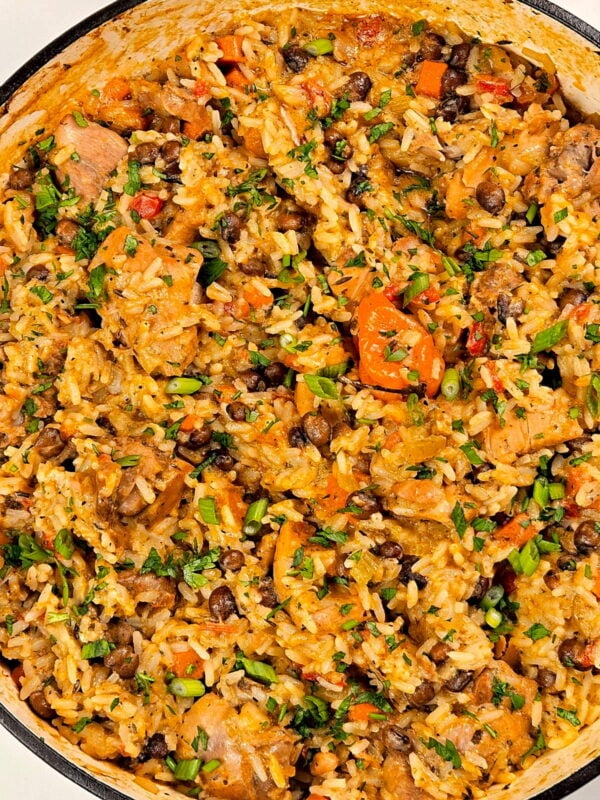
Green seasoning is another essential ingredient. This fresh herb blend typically includes scallions, thyme, garlic, cilantro or culantro, parsley, and peppers. It adds layers of fresh Caribbean flavor that simply can’t be replicated with dried herbs. I have a great recipe for Trini Green Seasoning and believe it or not I always have some frozen green seasoning in my freezer ready to go in my Trini Curry Chicken or Chicken Stew.
Coconut milk gives the rice richness without making it heavy, while pigeon peas add both texture and earthy flavor.
Ingredients You’ll Need
This recipe uses simple pantry staples along with a few classic Caribbean ingredients:
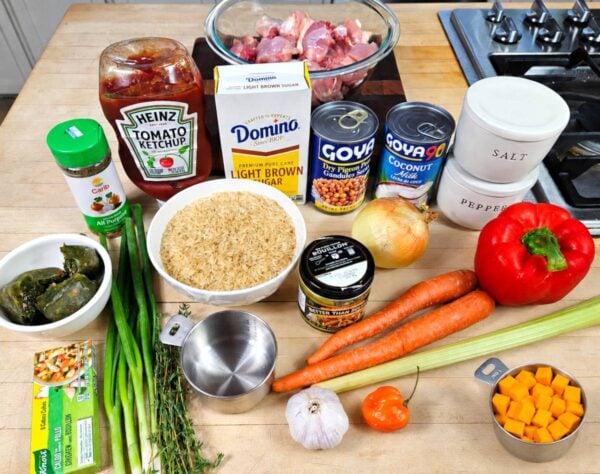
- Chicken – Bone-in, skinless chicken thighs are my favorite because they stay juicy and add plenty of flavor as they simmer with the rice. You can also use a whole chicken cut into serving pieces, or a mix of thighs and drumsticks. I don’t recommend boneless chicken, as it cooks too quickly and doesn’t contribute as much richness.
- Chicken bouillon – Adds a savory backbone that enhances the chicken flavor throughout the pelau. If you don’t have a cube, about 1 teaspoon of chicken bouillon powder works just as well.
- Carib All Purpose Sazon Completo – This classic Caribbean all-purpose seasoning brings a blend of herbs, spices, and garlic that gives pelau its authentic flavor. If you can’t find the Carib brand, another Caribbean all-purpose seasoning can be substituted.
- Tomato ketchup – An essential ingredient in Trinidadian pelau. It helps deepen the color during browning while adding a little sweetness and tang that balances the caramelized sugar.
- Green seasoning – One of the signature flavors of Trinidadian cooking. This fresh herb blend includes cilantro, culantro (chadon beni), scallions, thyme, garlic, and peppers. Try my easy Green Seasoning recipe if you want an upgrade over store bought.
- Scallions – Used both in the marinade and while building the pelau.
- Fresh thyme – Fresh thyme is traditional and gives the dish its unmistakable Caribbean aroma. If necessary, substitute about 1 teaspoon of dried thyme.
- Olive oil – Used for caramelizing the sugar and browning the chicken. Any neutral cooking oil, such as vegetable or canola oil, can be substituted.
- Brown sugar – This is one of the defining ingredients in pelau. It’s slowly caramelized until deep amber, creating the signature dark color.
- Garlic – Always freshly chopped.
- Aromatic veggies – Onion, celery, carrot and bell pepper (I use red, but any will work).
- Pumpkin – Some people use it, some don’t. I like the sweetness and creaminess it adds to pelau. Note that in the Caribbean they use Calabaza Squash, which they refer to as pumpkin. If you can’t find it, you can use regular pumpkin or acorn squash.
- Parboiled rice – This is the traditional choice for pelau because it stays fluffy and holds its shape during the long simmer. I don’t recommend jasmine or basmati rice here, as they become much softer and won’t produce the same texture.
- Brown pigeon peas – Another hallmark of classic pelau. They have a slightly nutty flavor and hold their shape well during cooking. Green pigeon peas can also be used, and in a pinch, black-eyed peas make a reasonable substitute.
- Coconut milk – Gives the rice its rich, creamy texture and subtle coconut flavor. I recommend using full-fat coconut milk for the best results.
- Chicken broth – Provides the cooking liquid and adds another layer of savory flavor.
- Scotch bonnet or habanero pepper – Traditionally added whole so it gently perfumes the rice with fruity heat without making the entire dish overly spicy. Pierce or halve the pepper if you prefer a hotter pelau. Scotch bonnet is the more traditional choice, but habanero is an excellent substitute.
- Salt and black pepper

How to Make Trinidad Chicken Pelau
Chicken pelau is surprisingly easy to make once you understand the process. The secret is building layers of flavor before the rice is added.
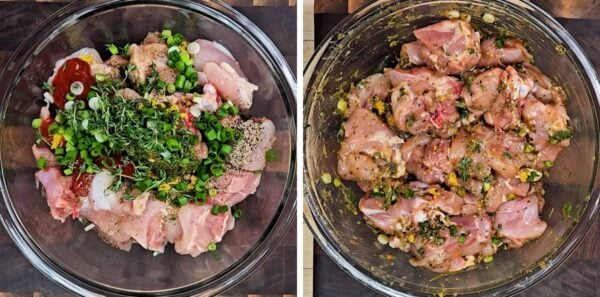
Marinate chicken: Start by marinating the chicken in a combination of salt, pepper, crushed chicken bouillon cube, Carib All Purpose Sazon Completo, ketchup, green seasoning, chopped scallions, and thyme for several hours so it absorbs all the flavors.
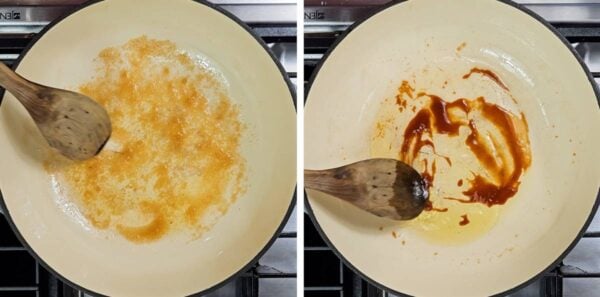
Caramelize the sugar: Next comes the signature step that makes pelau unique. Heat the olive oil in a large Dutch oven or heavy-bottomed pot over medium heat. Sprinkle in the brown sugar and let it melt, stirring constantly until it becomes a deep amber caramel, watching carefully so it doesn’t burn.
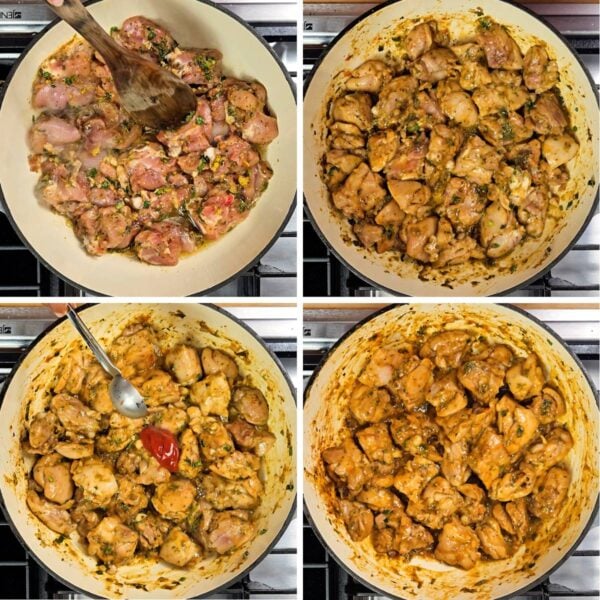
Brown the chicken: Add the marinated chicken along with any remaining marinade. Cook for 12 to 15 minutes, turning occasionally, until the chicken is well browned and coated in the caramelized sauce. For an even darker color, stir in an additional tablespoon or two of ketchup while the chicken browns.
Add the veggies: Once the chicken has browned, stir in onion, celery, scallions, bell pepper, carrots, pumpkin, garlic, and additional green seasoning. Cook the vegetables until they begin to soften.
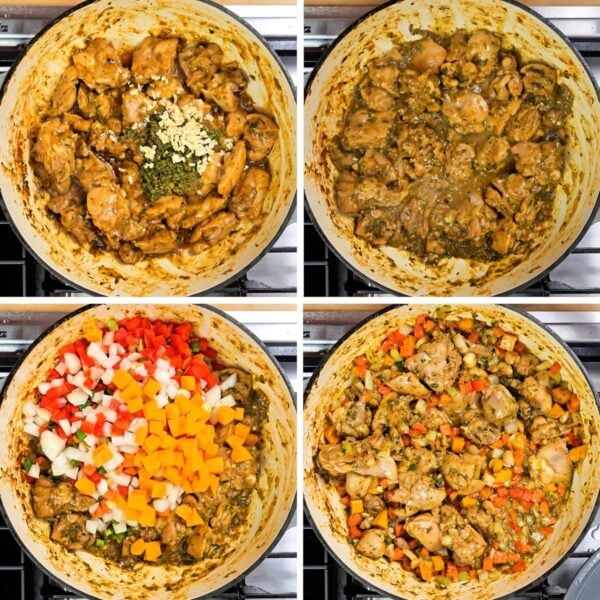
Add rice and liquid components: Then stir in the rice so every grain gets coated in all those flavorful juices. Add the pigeon peas, coconut milk, chicken broth, and seasonings before nestling a whole Scotch bonnet pepper into the pot.
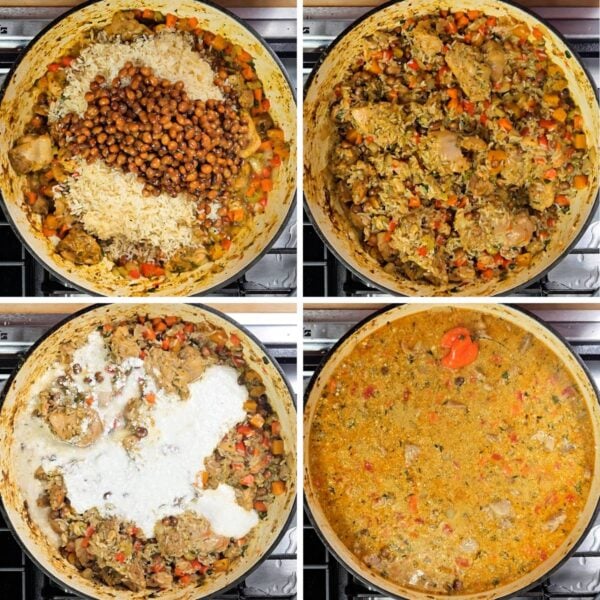
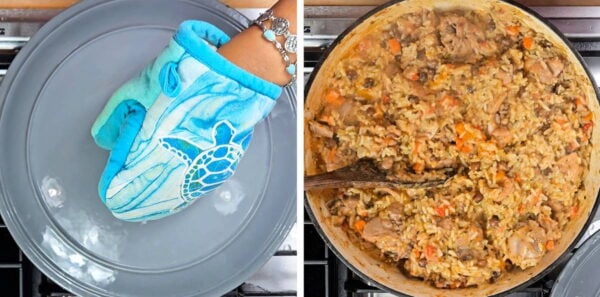
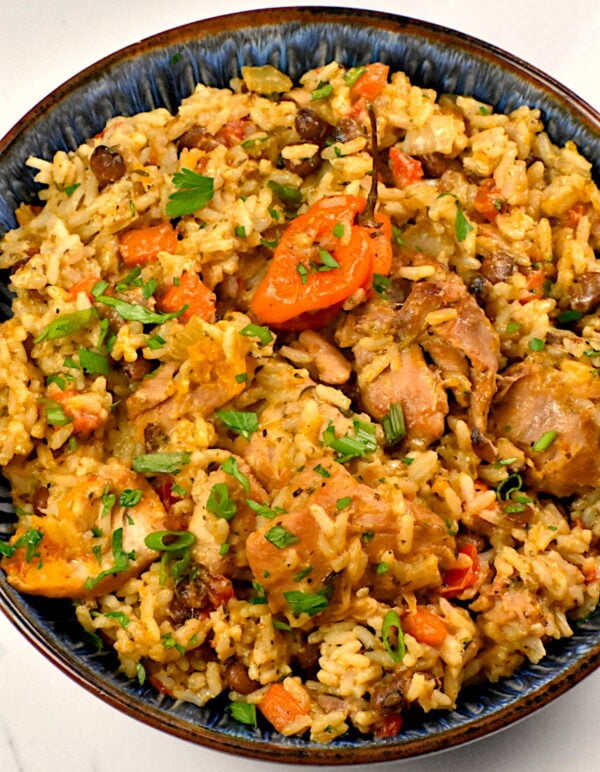
Simmer: Cover and simmer until the rice is tender. For a traditional wet pelau, cook until the rice is soft and still slightly moist. If you prefer a drier pelau, simply let it cook a few minutes longer before allowing it to rest. Fluff with a fork and serve warm.
Wet Pelau vs. Dry Pelau
One thing you’ll quickly discover if you talk to Trinidadians is that everyone has an opinion about pelau texture.
Many people actually prefer a wet pelau, where the rice stays soft, moist, and slightly saucy rather than completely dry and fluffy. Others enjoy a drier version with more separated grains.
Neither is wrong. It’s simply personal preference.
This recipe is written for a traditional wet pelau. If you’d like it drier, just let it cook a few minutes longer until more of the liquid has been absorbed.
Tips for the Best Chicken Pelau
- Marinate the chicken longer. A few hours makes a big difference, while overnight delivers the deepest flavor.
- Don’t rush the caramel. The brown sugar should become a deep amber color but never black. Burned sugar will make the entire pot bitter.
- Brown the chicken well. This develops even more flavor before the rice goes into the pot.
- Want darker chicken? Stir in an extra tablespoon or two of ketchup while browning the chicken. This is a common trick for achieving an even richer color.
- Use parboiled rice. It holds its texture beautifully throughout the cooking process.
- Leave the pepper whole. Unless you love serious heat, keeping the Scotch bonnet intact flavors the dish without making it overwhelmingly spicy.
- Stir once or twice. Unlike many rice dishes, it’s perfectly normal to gently stir pelau once or twice while it cooks to help the rice cook evenly.
Variations
Once you learn the basic technique, there are plenty of ways to customize pelau.
Try beef or pork instead of chicken, use shrimp for a seafood version, add pigtails for a more traditional island variation, or skip the meat entirely for a satisfying vegetarian pelau loaded with vegetables and pigeon peas.
Some families also add corn, while others swear by butter at the end for extra richness.
What to Serve with Chicken Pelau
Pelau is hearty enough to enjoy all by itself, but it’s often served alongside fresh Caribbean favorites.
A crisp cucumber salad, creamy coleslaw, sliced avocado, fried plantains, or a spoonful of pepper sauce all pair beautifully with the rich flavors of the rice.
A cold glass of sorrel, ginger beer, or fresh fruit juice completes the meal perfectly.
Leftovers
Chicken pelau keeps beautifully in the refrigerator for up to four days.
Reheat it gently on the stovetop or in the microwave with a splash of chicken broth or water to bring back its wonderfully moist texture.
Many people actually think pelau tastes even better the next day after all the flavors have had time to meld together.
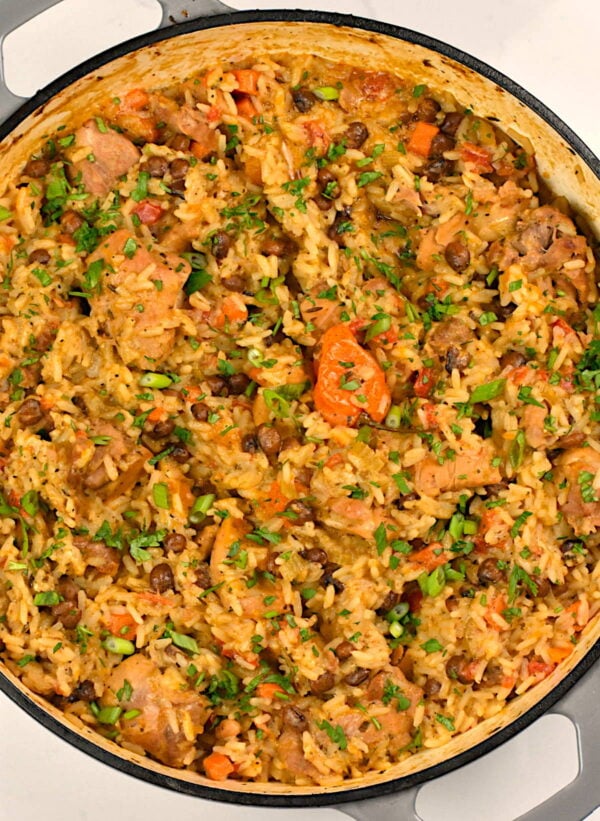
If you’ve never had the chance to try one of Trinidad and Tobago’s most beloved national dishes, this Chicken Pelau is the perfect place to start. It’s a comforting one-pot meal that’s full of rich Caribbean flavors, and I have a feeling it’ll earn a spot in your regular dinner rotation. Enjoy!
More great Caribbean Recipes:
Trinidadian Curry Chicken
Jamaican Pepper Steak
Bahamian Boiled Fish
Brown Stew Chicken
Cuban Mojo Pork
Aruban Keshi Yena
Jamaican Curry Goat
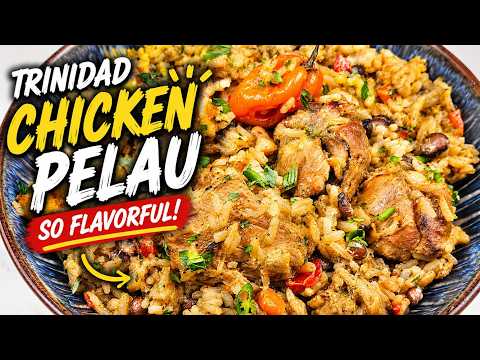
Recipe Video
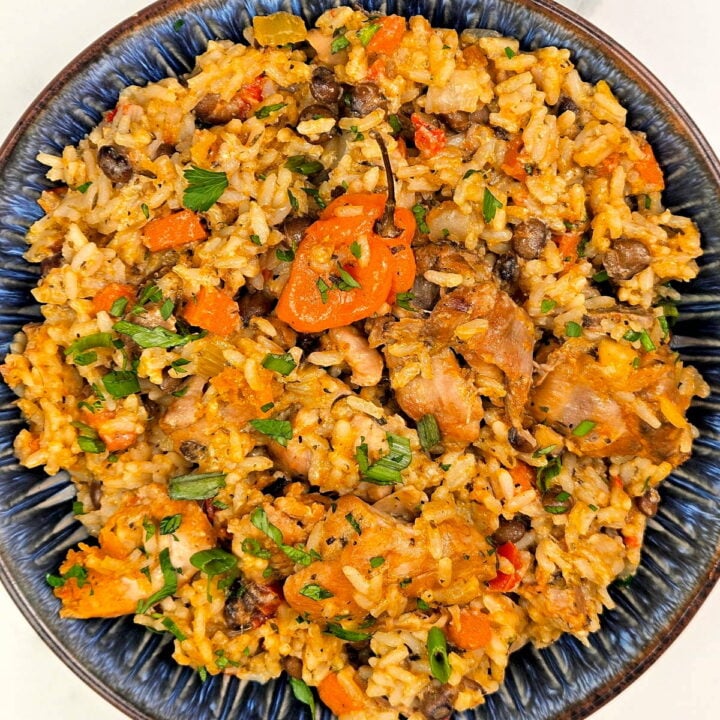
Trinidadian Chicken Pelau (Recipe + Video)
Trinidad Chicken Pelau is a comforting one-pot meal with caramelized chicken, rice, pigeon peas, coconut milk, pumpkin, and bold Caribbean seasonings.
Ingredients
Chicken Marination
- 3 pounds chicken (bone-in thighs with skin removed, or you can use whole chicken cut into chunks)
- 1 teaspoon salt
- 1 teaspoon pepper
- 1 cube chicken bouillon
- 2 teaspoons Carib All purpose Sazon completo
- 2-3 tablespoons tomato ketchup
- 3 tablespoons green seasoning
- 2 scallions, chopped
- 10-12 sprigs fresh thyme
Chicken Pelau
- 2 tablespoons olive oil
- 3 tablespoons brown sugar
- 1-2 tablespoons tomato ketchup
- 3 tablespoons green seasoning
- 4-5 garlic cloves, chopped
- 1 medium onion, diced
- 1 stalk celery, diced
- 2 scallions, diced
- 1 red bell pepper, cored and diced
- 1 cup carrot, diced
- 1 cup pumpkin, diced
- 2.5 cups parboiled rice, washed and drained
- 1 (15oz) can brown pigeon peas, drained
- 2 cups coconut milk
- 3 cups chicken broth
- 2 teaspoons Carib All purpose Sazon completo
- 1 habanero or scotch bonnet pepper
Instructions
- In a large bowl, combine the chicken with the remaining marination ingredients (salt, pepper, crushed chicken bouillon cube, Carib All Purpose Sazon Completo, ketchup, green seasoning, chopped scallions, and thyme). Toss until evenly coated and marinate in the refrigerator for at least 4-5 hours, or overnight for the best flavor.
- Heat the olive oil in a large Dutch oven or heavy-bottomed pot over medium heat. Sprinkle in the brown sugar and let it melt, stirring constantly until it becomes a deep amber caramel, watching carefully so it doesn't burn.
- Add the marinated chicken along with any remaining marinade. Cook for 12 to 15 minutes, turning occasionally, until the chicken is well browned and coated in the caramelized sauce. For an even darker color, stir in an additional tablespoon or two of ketchup while the chicken browns.
- Stir in the onion, celery, scallions, bell pepper, carrots, pumpkin, garlic, and additional green seasoning. Cook for 10 to 12 minutes, stirring occasionally, until the vegetables begin to soften.
- Add the drained rice and cook for 2 to 3 minutes, stirring frequently so every grain is coated with the flavorful mixture. Stir in the pigeon peas, coconut milk, chicken broth, and remaining Carib All Purpose Sazon Completo until well combined. Nestle the whole habanero or Scotch bonnet pepper into the pot without piercing it. Bring everything to a gentle boil. (If you want a spicier version you can pierce the pepper or cut it onto half)
- Once the liquid comes to a slow boil, reduce the heat to low and cover. Cook for about 25 to 30 minutes for a traditional wet pelau, gently stirring once or twice during cooking to ensure the rice cooks evenly. If the rice begins to look dry before it's tender, add a splash of chicken broth or water. For a drier pelau, simply continue cooking for a few more minutes until more of the liquid has been absorbed.
- Remove the pepper and let the pelau rest, covered, for 10 minutes. Fluff gently with a fork before serving.
Notes
- Browning the sugar is what gives pelau its signature rich color and deep, slightly smoky flavor. Watch it carefully, as it can burn quickly once it reaches the amber stage.
- Adding 1 tablespoon of ketchup while browning the chicken helps create a beautiful dark coating. If you prefer an even darker pelau, stir in an extra tablespoon of ketchup during this step.
- Keep the Scotch bonnet or habanero whole while it cooks. It infuses the dish with subtle heat and fruity flavor without making the entire pot overly spicy. Pierce the pepper before adding it if you prefer a spicier pelau.
- Parboiled rice works best because it holds its shape during cooking. Rinse it well before adding it to the pot.
- Pumpkin is traditional in pelau. As it cooks, it softens and partially melts into the rice, adding natural sweetness and a creamy texture.
- Let the pelau rest for 10 minutes before fluffing so the rice finishes steaming and the flavors meld together.
- Leftovers keep well in the refrigerator for up to 4 days and reheat beautifully.
Nutrition Information
Yield 8 Serving Size 1Amount Per Serving Calories 730Total Fat 41gSaturated Fat 19gUnsaturated Fat 22gCholesterol 161mgSodium 4178mgCarbohydrates 42gFiber 5gSugar 9gProtein 48g
Nutrition information is automatically calculated, so should only be used as an approximation.

Welcome to GypsyPlate! I'm Alpana, former worldwide tour manager and professional caterer, now full time blogger. I love exploring cuisines from around the world, and my recipes have been featured on sites such as MSN, Parade, Brit + Co, CNET and AOL. You can explore my entire collection of sortable recipes in my Recipe Index or learn more about me here.
Get griddling! Try these Blackstone Recipes!
Never miss a recipe!
Join the GypsyPlate mailing list and get easy dinner recipes right in your mailbox. From homestyle comfort food to exotic dishes from around the world.