Garbure is the kind of rustic French soup that feels like it was invented purely to keep people warm through long winters in the countryside. Big chunks of vegetables, creamy beans, smoky ham, potatoes, plenty of fresh herbs … Everything slowly simmered together for hours. If you happen to have a leftover hambone in the fridge or freezer, this is such a great variation on the classic Ham and Bean Soup.
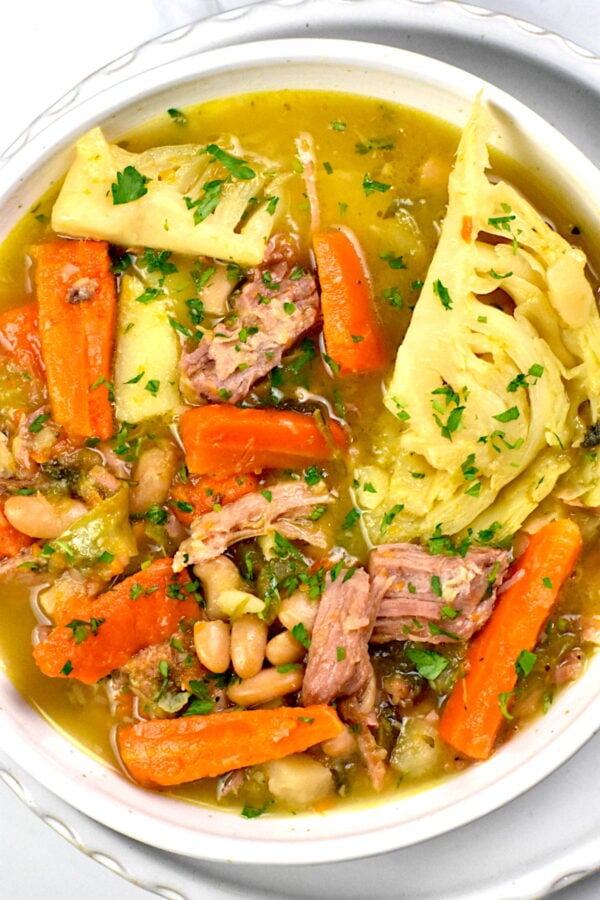
This is old-school farmhouse cooking at its best. Nothing fancy, nothing delicate, just simple ingredients transforming into something unbelievably comforting with a little patience and a big pot.
I love recipes like this for cooking for the people I care about most. There’s something about a giant pot slowly simmering away for hours that feels extra comforting and homey. Just like my Spanish Rabo de Toro, Hungarian Goulash, or Mexican Birria, these are the kinds of old-fashioned recipes that remind me some of the best meals are the ones that can’t be rushed.
What is Garbure
Garbure is a rustic soup from the Gascony region of southwestern France. It’s a slow-simmered soup built around humble ingredients like cabbage, beans, potatoes, root vegetables, fresh herbs, and preserved meats such as ham, duck confit, or sausage.
Traditionally, Garbure was considered peasant food, made with whatever ingredients families had available from their gardens, pantry, or leftover Sunday dinner.
Historically, the soup would often simmer near the hearth for most of the day, with ingredients added little by little as needed.
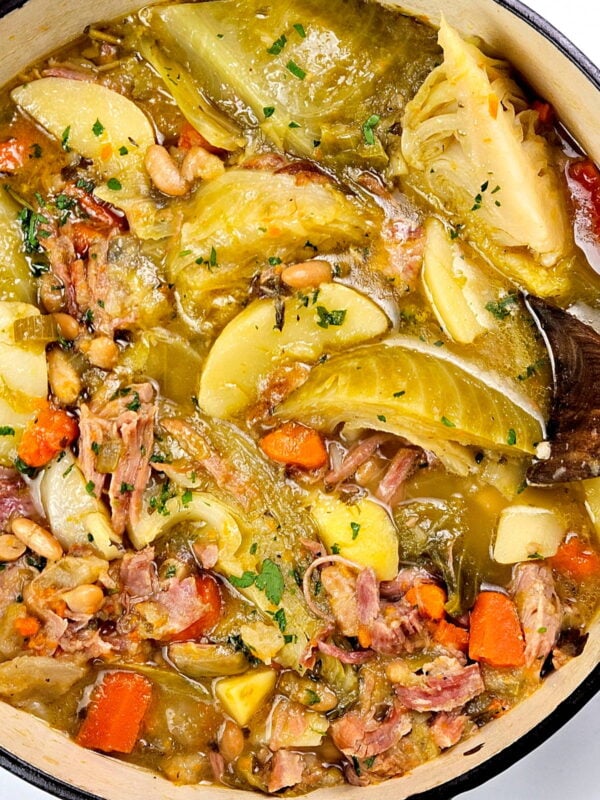
There’s no single “correct” version of Garbure. Some are brothier, some almost stew-like, and every family tends to have their own variation. In some older traditions, thick slices of stale country bread were placed into the bowl to soak up the flavorful broth. But at its heart, Garbure is all about slow cooking, rustic ingredients, and creating big flavor from simple beginnings.
Ingredients Notes
Exact ingredient amounts can be found in the recipe card at the end of this post. Here are the things you will need:
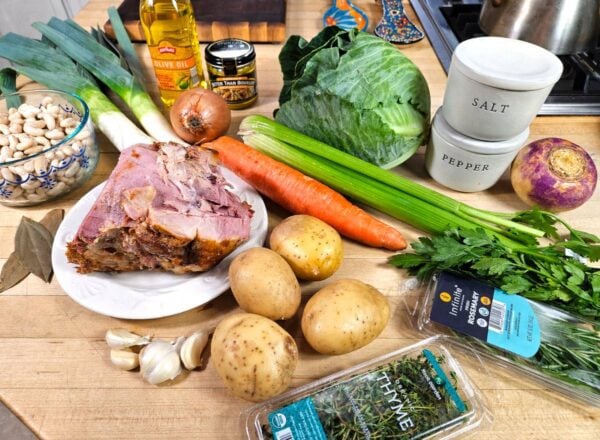
- Oil – Just a little oil helps soften the vegetables and starts building the flavor base of the soup right from the beginning. I use olive oil.
- Hambone – This is what gives Garbure its deep rustic flavor. As it slowly simmers, the hambone adds smoky richness to the broth while the meat becomes tender enough to shred right back into the soup. Leftover holiday hambones are absolutely perfect here, especially ones with plenty of meat still attached.
- White beans: Traditionally, Garbure is often made with Tarbais beans, a creamy white bean from the Gascony region of southwestern France. They can be hard to find outside France, so I usually use Great Northern beans or cannellini beans instead.
- The vegetables – This soup is built around simple farmhouse vegetables slowly cooking together until everything becomes rich and deeply comforting. The onions, carrots, leeks, celery, turnip and garlic make flavor base of the broth. The potatoes become buttery soft, and the cabbage slowly melts into the broth, which is one of the signature characteristics of traditional Garbure.
- Fresh herbs – Today I am using thyme, rosemary, parsley, and bay leaves. Rustic soups like this rely heavily on fresh herbs to build layers of flavor without needing complicated ingredients.
- Chicken stock – Along with the hambone, the stock forms the backbone of the soup. A good flavorful stock makes a huge difference here.
- Salt & pepper – The hambone already adds some saltiness, so I like seasoning gradually throughout the cooking process and adjusting at the very end.

How to Make Garbure
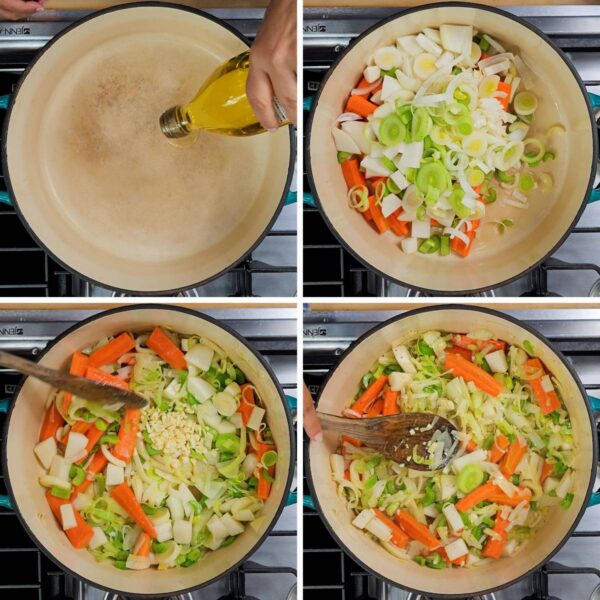
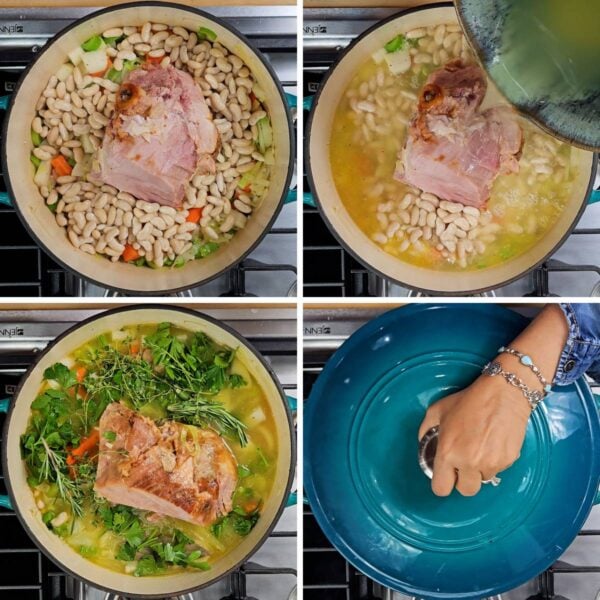
Sauté the vegetables: Start by heating the oil in a large Dutch oven or heavy soup pot over medium heat. Add the onion, carrots, leeks, celery, and turnip. Let them cook for about 8 to 10 minutes, stirring occasionally, until the vegetables start softening and the onions turn translucent. Add the garlic and cook for another minute, just until fragrant.
Build the soup: Season lightly with salt and pepper, then nestle the hambone right into the pot. Add the soaked white beans, bay leaves, thyme, rosemary, parsley, and chicken stock.
Bring everything to a gentle boil, then lower the heat to a slow simmer. Cover the pot and let it cook for about 2½ hours, stirring occasionally, until the beans are becoming tender and the meat on the hambone is starting to fall apart beautifully.
If your pot is a little shallow like mine, just flip the hambone a few times during cooking so all sides spend time simmering in that rich broth.
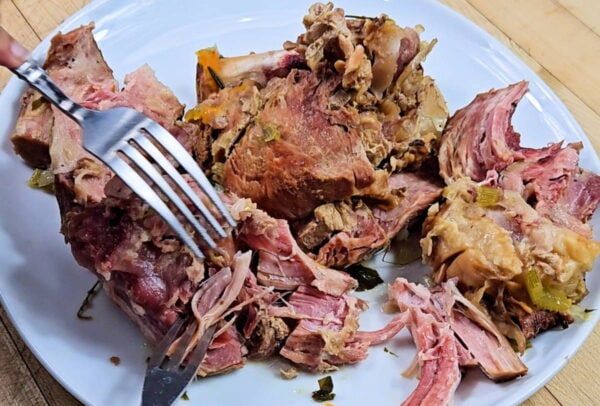
Shred the ham: Now carefully remove the hambone and transfer it to a cutting board or large plate. Once cool enough to handle, shred all the meat from the hambone, discarding any fat, cartilage, or tough bits. This is always one of my favorite parts because the meat becomes incredibly tender after all those hours simmering away in the broth.
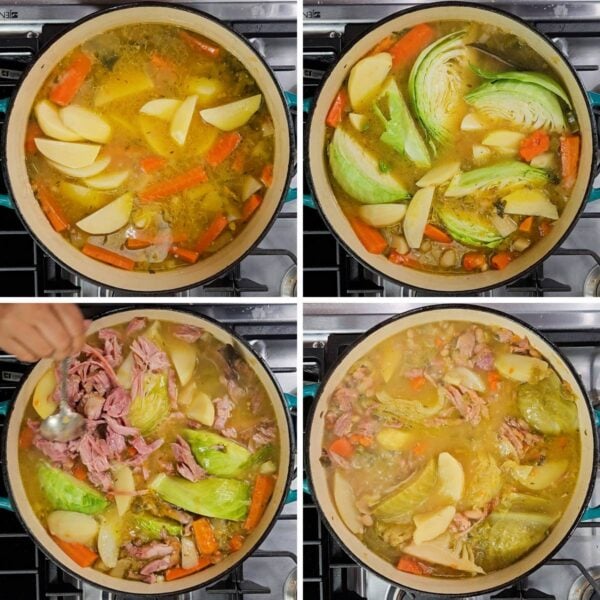
Finish the Garbure: Return the shredded ham right back into the pot. Add the potatoes, cabbage, and 1 cup water to the soup. Cover again and let everything continue simmering uncovered for another 45 minutes to 1 hour, until the potatoes are perfectly tender, the cabbage has softened beautifully, and the broth has turned rich and hearty. Remove the bay leaves and herb stems, then taste and adjust with more salt and pepper if needed.
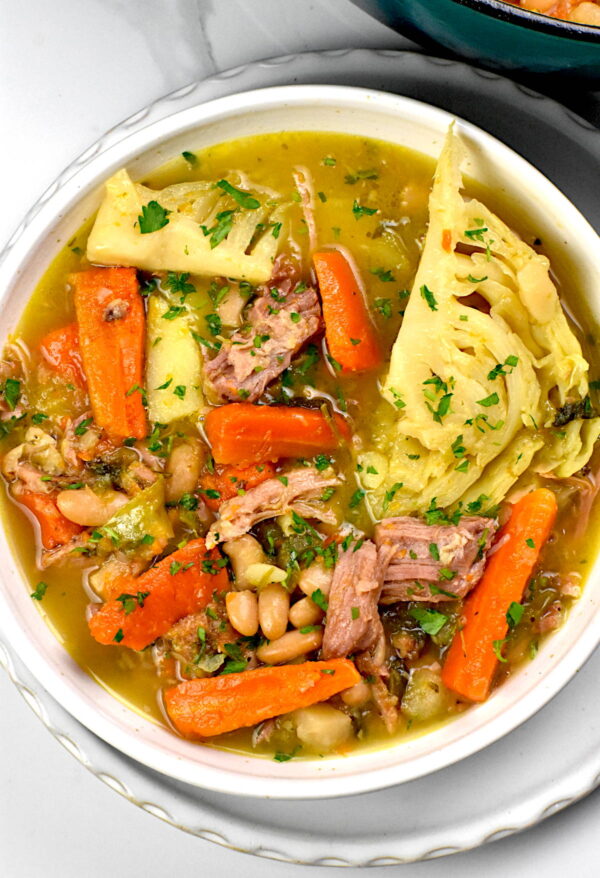
Serve: Ladle the Garbure into bowls and serve it hot with plenty of crusty bread for soaking up every last bit of that rustic broth.
Alpana’s Tips
- Take your time with the simmer: Garbure is not a rushed soup. The long slow simmer is what gives the broth its deep rustic flavor.
- Flip the hambone if needed: If your pot is a little shallow, just rotate or flip the hambone a few times during cooking so all sides spend time simmering in the broth.
- Keep the simmer gentle: You want a slow steady bubble here, not a rolling boil. That keeps the beans creamy and the meat becomes tender.
- Don’t overcook the potatoes: Adding the potatoes and cabbage later keeps them from completely breaking down during the long initial simmer.
- Taste at the end: Between the hambone and stock, salt levels can vary a lot. I always wait until the end before adjusting seasoning.
- It gets even better later: Like many rustic soups and stews, Garbure tastes even better the next day after all the flavors settle together overnight.
Variations
Duck confit Garbure: One of the more traditional versions from Gascony uses duck confit instead of ham.
Add sausage: Smoked sausage or French-style sausage makes an excellent addition if you want an even heartier pot of soup.
Make it brothier or thicker: Some Garbure recipes are very brothy while others are almost stew-like. Add a little extra stock for a soupier version, or simmer uncovered longer for a thicker rustic texture. In old countryside kitchens, people joked the soup was ready when a spoon could nearly stand upright in the pot.
Add stale bread: Traditionally, thick slices of stale country bread were often placed in the bottom of the bowl before ladling the soup over top.
What to Serve with Garbure
Crusty bread: Honestly essential here. A rustic loaf is perfect for soaking up that rich broth.
Simple green salad: A crisp salad with sharp vinaigrette balances the hearty richness beautifully.
Red wine: This kind of slow-cooked French countryside food practically begs for a glass of red wine alongside it.
Storage & Leftovers
Garbure stores beautifully and honestly tastes even better the next day. Store leftovers in an airtight container in the refrigerator for up to 4 days.
To reheat, warm it slowly on the stovetop over medium-low heat until hot. If the soup thickens too much in the fridge, just add a splash of water or stock while reheating.
You can freeze it, but keep in mind that the texture of the potatoes will degrade. Freeze in portions for up to 2 months, then thaw overnight in the refrigerator before reheating.
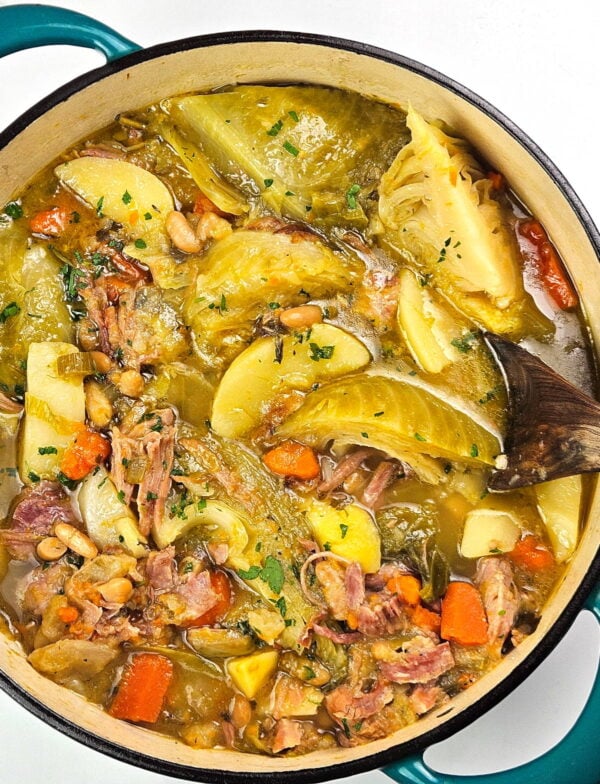
Final verdict… Garbure wins my heart bigly. This is exactly the kind of slow cozy cooking I never get tired of. A giant pot, simple ingredients, and a few quiet hours turning everything into something deeply comforting and rustic. If you’ve got a leftover hambone sitting in the fridge, Garbure might just become your new favorite way to use it.
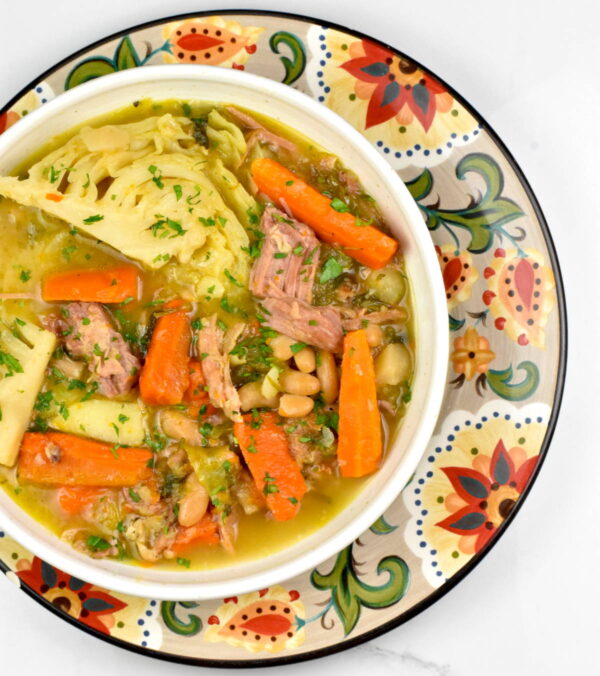
Garbure, on our Gypsy Plate… enjoy!
More great French Recipes:
Chicken Chasseur
Fish en Papillote
Tarragon Chicken
Ratatouille
Chicken Provençal
Coq au Vin
Recipe Video

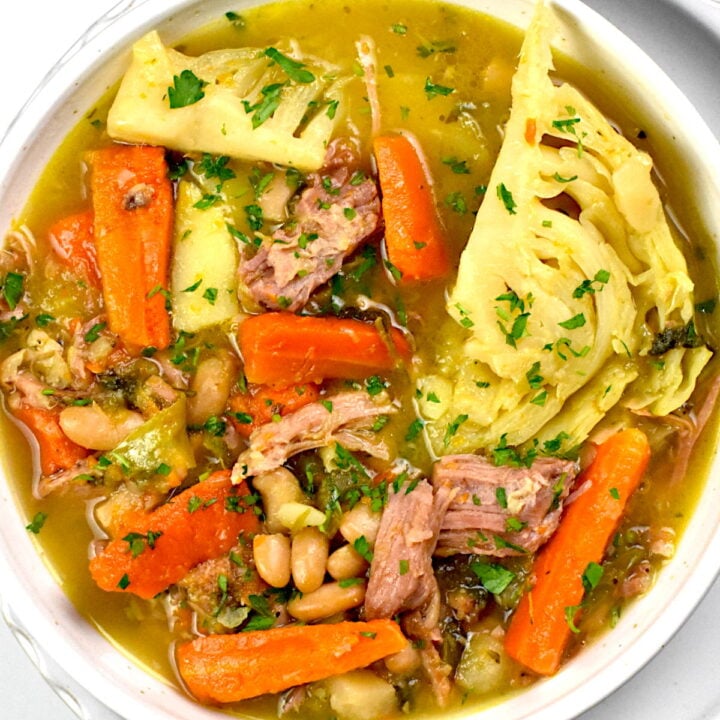
Garbure (French Ham and Vegetable Soup) | Recipe + Video
Garbure is a rustic French soup loaded with smoky ham, white beans, cabbage, potatoes, root vegetables, and fresh herbs, all slowly simmered into one incredibly comforting meal.
Ingredients
- 2-3 tablespoons olive oil
- 1 large onion, sliced or diced
- 2 large carrots, peeled and cut into large chunks
- 2 leeks, sliced
- 3 stalks celery, sliced
- 1 turnip, peeled and diced
- 4-5 garlic cloves, finely chopped
- salt, to taste
- pepper, to taste
- 1 hambone
- 8oz dried white beans, soaked overnight
- 2 bay leaves
- 15-16 fresh thyme sprigs
- 3 rosemary sprigs
- ½ cup fresh parsley, chopped roughly
- 8 cups chicken broth or stock
- 4 small potatoes, peeled and cut into wedges
- ½ cabbage, cut into wedges
Instructions
- Heat the oil in a large Dutch oven or heavy soup pot over medium heat. Add the onion, carrots, leeks, celery, and turnip. Sauté for 8 to 10 minutes, stirring occasionally, until the vegetables start softening and the onions turn translucent. Add the garlic and cook for another minute.
- Season lightly with salt and pepper. Nestle in the hambone, then add the soaked white beans, bay leaves, thyme sprigs, rosemary sprigs, parsley, and chicken stock.
- Bring the soup to a gentle boil, then reduce the heat to low. Cover and simmer for about 2½ hours, or until the beans are getting tender and the meat on the hambone is falling apart beautifully. Stir occasionally during cooking. (I flip the hambone a few times, as my pot is on shallower side.)
- Remove the hambone from the pot and place it on a cutting board or plate. Add the potatoes, cabbage, and 1 cup water to the soup. Cover the pot and continue simmering while you work on the meat.
- Once the hambone is cool enough to handle, shred all the meat from the bone, discarding any fat, cartilage, or tough bits.
- Return the shredded ham to the pot. Continue simmering uncovered for 45 minutes to 1 hour, until the potatoes are tender, the cabbage is soft, and the broth has turned rich and hearty.
- Remove and discard the bay leaves, thyme stems, and rosemary stems. Taste and adjust with more salt and pepper if needed.
- Ladle into bowls and serve hot with plenty of crusty bread.
Nutrition Information
Yield 8 Serving Size 1Amount Per Serving Calories 191Total Fat 2gSaturated Fat 0gUnsaturated Fat 2gCholesterol 16mgSodium 1139mgCarbohydrates 34gFiber 6gSugar 5gProtein 11g
Nutrition information is automatically calculated, so should only be used as an approximation.

Welcome to GypsyPlate! I'm Alpana, former worldwide tour manager and professional caterer, now full time blogger. I love exploring cuisines from around the world, and my recipes have been featured on sites such as MSN, Parade, Brit + Co, CNET and AOL. You can explore my entire collection of sortable recipes in my Recipe Index or learn more about me here.
Get griddling! Try these Blackstone Recipes!
Never miss a recipe!
Join the GypsyPlate mailing list and get easy dinner recipes right in your mailbox. From homestyle comfort food to exotic dishes from around the world.